


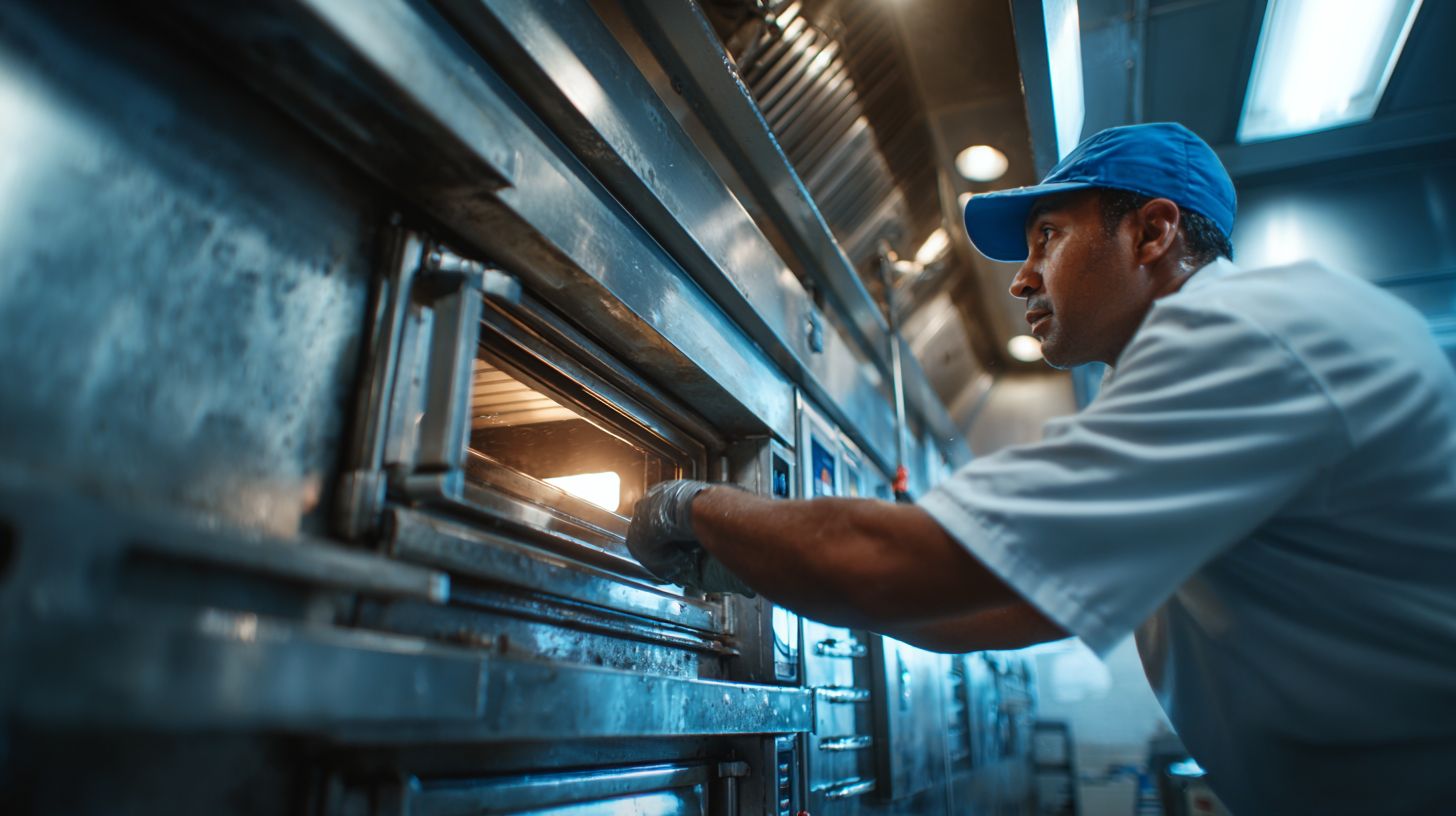


Ask a kitchen manager what hood cleaning is for and most will say something about fire prevention or health code compliance. Both are correct. But there is a third answer that comes up less often and matters more to the people who spend eight, ten, or twelve hours in that kitchen every day: hood cleaning is one of the most direct levers an operator has over the working conditions of their kitchen staff.
That connection rarely gets named directly. It operates in the background, in the ambient temperature of the cooking line, in the quality of the air during a packed service, in the cumulative fatigue that builds across a long shift in a poorly ventilated kitchen. When the exhaust system is maintained and working efficiently, the kitchen is a manageable place to spend a full workday. When it is degraded by grease accumulation and underperforming, the kitchen is measurably harder to work in — not because of workload, staffing, or menu complexity, but because the physical environment itself is making demands that a maintained system would not.
This article is about that specific dimension of hood cleaning: what the exhaust system’s condition means for the people standing under it, why that matters operationally and not just ethically, and what operators who understand this connection do differently as a result.
Commercial kitchen staff work in conditions that most people outside the industry do not fully appreciate. The physical demands are significant — sustained standing, rapid movement, heat exposure, and a pace of work that does not allow for gradual adjustment when conditions change. In that context, environmental factors that might seem minor become genuinely meaningful over the course of a full shift.
A well-maintained exhaust system creates a kitchen environment that, while still demanding, functions within parameters that the human body can sustain across a long workday without accumulating excessive physiological stress. Heat generated by cooking equipment rises and is captured before it saturates the ambient air of the cooking zone. Grease-laden vapor and combustion byproducts from gas equipment are drawn away from the breathing zone before they accumulate to concentrations that affect respiratory comfort. The pressure dynamics created by the exhaust system drawing air across the cooking line keep the immediate working environment in a state that is, at minimum, not adding unnecessary burden to the work itself.
That baseline is not a luxury. It is what a properly functioning exhaust system is designed to deliver, and it is what kitchen staff deserve to work in as a normal condition rather than as an exception on good days.
What most kitchens don’t realize about hood cleaning until it starts affecting daily work is that the changes in working conditions are gradual enough to normalize before they become visibly problematic — which is exactly why they tend to go unaddressed until they are significant.
The air quality connection between hood cleaning and kitchen staff working conditions is the most direct and the most consistently underestimated. It is also the one with the clearest occupational health implications.
When an exhaust system is drawing air efficiently through a clean system, grease-laden vapor produced by the cooking process is captured and removed before it disperses into the broader kitchen environment. The filters intercept the initial particle load. The airflow pattern created by the exhaust fan draws contaminated air upward and away from the cooking zone. The ductwork carries it out of the building. Kitchen staff working the line are breathing air that the system has been continuously cleaning since the first burner was lit.
When grease accumulation reduces the system’s airflow capacity, that cleaning function degrades. More cooking vapor remains in the kitchen air rather than being captured and removed. The particulate concentration in the breathing zone rises. The specific compounds present — airborne grease particles, combustion byproducts from gas equipment, moisture from cooking processes — are not immediately dangerous at typical kitchen concentrations, but they are occupational exposures that accumulate across shifts and across careers.
The immediate experience for kitchen staff is described consistently: the air feels heavier, eyes water more during service, the smell of the cooking environment is more pervasive and harder to escape, and the feeling of needing fresh air is stronger after finishing a shift. These are the subjective signs of an objective change in air quality that the exhaust system is no longer managing effectively.
Kitchen hood cleaning as a full-system service — covering not just the visible hood area but the complete duct run and fan housing where airflow restriction develops — is what restores the system’s capacity to manage the breathing zone environment that kitchen staff work in every day.

Heat exposure is the most immediately felt dimension of exhaust system performance for kitchen staff, and it is the one that produces the most direct connection between hood cleaning and the physical experience of working a full shift.
Commercial cooking equipment generates substantial heat, and managing that heat within a workable range at the cooking line requires the exhaust system to draw it away efficiently. A clean exhaust fan running against minimal resistance maintains the pressure differential that keeps ambient temperatures at the cooking line within the range the kitchen was designed to operate in. That temperature range is still warm — commercial kitchens are hot working environments — but it is within the parameters that kitchen staff can sustain across a service period without their bodies accumulating thermal stress at a rate that accelerates fatigue.
As grease accumulation reduces exhaust system airflow, the heat management function degrades in proportion. The same amount of heat is being generated, but less of it is being removed. The ambient temperature of the cooking line rises. The temperature differential between the line and the rest of the kitchen increases. The thermal environment that kitchen staff are working in shifts from demanding but manageable to demanding and actively uncomfortable.
The physical consequences manifest as accelerated fatigue. A body managing elevated ambient heat draws on physiological resources that would otherwise be available for sustained physical work. Over the course of a long shift in a kitchen running above its designed temperature range, the accumulated effect is a staff that reaches the end of service more depleted than the same kitchen would produce with an efficient exhaust system.
This is one of the reasons kitchens with well-maintained exhaust systems retain staff better than equivalent kitchens with deferred maintenance — not because the operators explicitly understand the connection, but because the working environment they maintain is genuinely more sustainable for the people doing the work.
Individual moments in a kitchen are rarely defined by a single environmental factor. What shapes the experience of a full shift is the accumulation of small differences that compound across hours of sustained work.
An ambient temperature two or three degrees above what a clean exhaust system would produce does not feel dramatic at the beginning of a service. By hour six or seven, that sustained additional heat has been drawing on the body’s thermoregulation throughout the entire period. A slightly heavier air quality that does not immediately trigger respiratory discomfort becomes a cumulative exposure across the full breathing duration of a shift. A kitchen that requires slightly more physical effort to work in throughout the day adds up to a measurably more demanding day than the same kitchen with a functioning exhaust system.
This compounding is why operators who manage their exhaust system well often describe their kitchens as running more smoothly without being able to identify a specific cause. The exhaust system is not producing a dramatic positive effect on any single aspect of the working environment. It is preventing small degradations from accumulating across multiple dimensions simultaneously, and the combined absence of those degradations produces a kitchen that is simply easier to work in across the full duration of a service period.
Why kitchen hood cleaning matters more than most kitchens realize becomes clearest when the cumulative working environment picture is considered across weeks and months rather than just within a single service, where small daily differences build into a meaningful gap between kitchens that maintain their systems and those that do not.
Commercial kitchen turnover is a persistent operational challenge, and the causes most operators focus on are compensation, scheduling, management culture, and career advancement. These are real factors. But the physical working environment is also a factor, and it is one that operators have more direct control over than they often realize through the maintenance decisions they make about their exhaust system.
Kitchen staff who work in an environment that is physically harder than it needs to be — hotter, heavier air, more demanding across a full shift — experience that environment as part of what it means to work at that kitchen. They do not usually analyze the cause. They feel the effect. When a staff member who has been working in that kitchen takes a shift at a different operation where the exhaust system is well-maintained and the environment is more comfortable, the comparison registers physically rather than conceptually. The other kitchen is easier to work in, and that becomes a factor in where they choose to continue their career.
Operators who understand this connection make different decisions about hood cleaning than operators who frame it purely as a fire safety or compliance matter. They maintain the schedule because they understand that the working environment they are preserving has direct implications for their ability to keep the people they have trained and developed. The maintenance cost is not just a fire prevention investment. It is also a staff retention investment, viewed through the lens of what sustained good working conditions mean for the people who experience them every day.
The connection between exhaust system performance and the broader kitchen cleaning workload is direct but rarely discussed in those terms. When the exhaust system is capturing grease-laden vapor efficiently, it is keeping that vapor out of the kitchen environment where it would otherwise settle on surfaces, equipment, and anywhere else in the kitchen that airflow carries it.
The grease film that accumulates on walls, equipment surfaces, shelving, and other kitchen components is substantially reduced in a kitchen with a well-functioning exhaust system compared to the same kitchen with a degraded system. This means kitchen staff responsible for daily and weekly cleaning routines are managing a lighter grease migration load when the exhaust system is maintained. The surfaces stay cleaner between deep cleans, the daily cleaning tasks are less demanding, and the overall sanitation baseline of the kitchen is easier to maintain.
This connection between exhaust system condition and the workload of kitchen cleaning staff is one of the practical arguments for understanding janitorial and cleaning services in the context of the overall kitchen maintenance picture, where the exhaust system’s performance either supports or undermines every other cleaning effort made in the kitchen.
When the exhaust system is not performing well, staff responsible for kitchen cleaning are working harder to maintain the same standard. More grease is migrating to surfaces. More surfaces require more frequent attention. The cleaning workload increases not because cleaning practices have changed but because the primary capture mechanism for grease migration — the exhaust system — is no longer doing its share of the work.

There are patterns in how kitchens that take the working environment seriously approach their exhaust system maintenance, and those patterns are consistent enough to describe as a distinct operational orientation rather than a coincidence.
These kitchens tend to treat hood cleaning as an operational decision rather than a compliance deadline. The schedule is calibrated to the kitchen’s actual grease production rather than a generic interval, and it is reviewed whenever the kitchen changes in ways that affect that production. The scope of service is defined and verified rather than assumed — operators in these kitchens know that their provider accesses the full duct run and fan housing at every service and they have documentation confirming it.
They also tend to pay attention to what kitchen staff report about the working environment. A cook who mentions that the kitchen feels hotter than usual, or that the air is heavier, or that smoke is lingering longer than it should, is providing early-warning data about exhaust system performance that an operator oriented toward staff working conditions takes seriously rather than dismissing as normal kitchen variation.
What new restaurant owners need to know about hood cleaning before they open includes this orientation as a foundational element — establishing the exhaust system maintenance practice at opening with the full understanding of what it affects, rather than narrowing the framing to fire safety and compliance.
The exhaust system does not stand alone in determining the quality of the working environment in a commercial kitchen. It is the most directly impactful component on air quality and temperature at the cooking line, but the broader facility maintenance picture — equipment condition, building systems, structural integrity — shapes the working environment in aggregate.
Operators who understand the exhaust system’s role in staff working conditions tend to have a broader systems-level view of what facility maintenance is for. They are not maintaining the building to check compliance boxes. They are maintaining it because the building’s condition is the environment their staff works in, and that environment directly affects the sustainability, quality, and safety of the work those staff members do every day.
Facility repair and maintenance services that address the kitchen’s broader infrastructure alongside exhaust system maintenance give operators the integrated picture that makes this kind of systems-level thinking practical rather than aspirational. When the exhaust system, the cooking equipment, and the broader building systems are all being maintained with their effect on the working environment in mind, the kitchen that results is one where staff can do their best work across a full career rather than burning out in a physically unsustainable environment.
Commercial kitchens operating in the Houston area carry an additional working environment burden that operators elsewhere do not face to the same degree. The combination of Houston’s high ambient humidity and elevated temperatures creates external conditions that the kitchen’s exhaust system is working against throughout the year, particularly during the summer months when outdoor temperatures make the thermal management challenge at the cooking line more demanding.
A kitchen in Houston where the exhaust system is underperforming due to grease accumulation is a kitchen where the internal temperature at the cooking line is elevated by both the equipment and the degraded heat removal, while the external environment is contributing its own thermal load. The compounded effect on kitchen staff working the line in those conditions is more significant than the same exhaust system performance deficit would produce in a cooler, drier climate.
Kitchens served by Commercial Facility Maintenance Services in Houston, TX that maintain their exhaust systems on schedules calibrated to the regional grease accumulation rates — accounting for the humidity-driven deposit formation that the local climate produces — are protecting their staff’s working conditions against both the internal and external thermal factors their kitchen faces.
For operators in the Katy area facing the same regional conditions, Commercial Facility Maintenance Services in Katy, TX reflects the same environmental context that makes conservative exhaust system maintenance intervals a staff working conditions decision as much as a safety and compliance one.
Why hood cleaning quietly shapes how Houston kitchens hold up over time addresses the longitudinal picture of how regional conditions affect kitchens across years of operation, which is where the staff working conditions dimension of exhaust system maintenance becomes most visible in the gap between kitchens that have maintained their systems and those that have not.
How to clean a restaurant hood effectively and what that process involves across the full system is part of the practical knowledge that operators who care about their working environment maintain, because understanding what the service should deliver is what allows them to verify that it is actually being delivered.
The table below maps exhaust system maintenance status to working condition outcomes across the key dimensions that affect kitchen staff on a daily basis.
Working Condition Dimension | Well-Maintained Exhaust System | Degraded Exhaust System | Staff Experience |
Cooking line temperature | Within designed operating range | Elevated above baseline | More physical fatigue across long shifts |
Air quality at breathing zone | Grease vapor captured and removed efficiently | Increased particulate in breathing air | Heavier air, more eye irritation, stronger odor |
Smoke clearance during service | Clears quickly as exhaust draws it away | Lingers at cooking zone level | More visual and respiratory discomfort during service |
Daily cleaning workload | Less grease migration to surrounding surfaces | More grease on walls, equipment, shelving | Higher cleaning burden for staff maintaining kitchen |
Sustained workability across a full shift | Environment sustainable across service period | Cumulative thermal and air quality load | Greater end-of-shift fatigue than workload alone explains |
Staff retention signal | Kitchen is physically manageable to work in | Kitchen is harder than comparable operations | Staff who work elsewhere notice the difference |

These foundational points build a practical framework for thinking about hood cleaning as a working conditions decision alongside its fire safety and compliance dimensions.
The exhaust system’s condition directly affects the air quality at the breathing zone of kitchen staff. Grease accumulation that reduces airflow capacity increases the concentration of cooking-related particulates in the air kitchen staff breathe throughout their shift.
Heat management at the cooking line is a direct function of exhaust system performance. A degraded system allows cooking equipment heat to accumulate in the ambient air of the cooking zone, raising temperatures above the designed operating range and accelerating physical fatigue across long shifts.
The cumulative effect of small environmental degradations across a full shift is more significant than any individual factor suggests. A kitchen that is consistently two or three degrees hotter, with slightly heavier air and slower smoke clearance, is a meaningfully more demanding environment than the same kitchen with a functioning exhaust system.
Kitchen staff notice changes in working conditions before they produce visible evidence or measurable performance degradation. Reports from staff about the kitchen feeling hotter or the air feeling heavier are early-warning data about exhaust system performance, not routine complaints to be normalized.
The relationship between exhaust system performance and daily kitchen cleaning workload is direct. A degraded system allows more grease to migrate to surfaces throughout the kitchen, increasing the cleaning burden on staff responsible for maintaining kitchen sanitation standards.
Hood cleaning as a staff working conditions investment is not separate from its fire safety and compliance value. It is an additional dimension of the same decision that operators who understand their kitchen environment recognize and factor into how they think about the maintenance schedule.
How does hood cleaning affect the working conditions of kitchen staff?
A well-maintained exhaust system keeps the cooking line temperature within the designed operating range, removes grease-laden vapor and combustion byproducts from the breathing zone before they accumulate, and clears smoke from cooking processes before it lingers at the level where staff are working. When grease accumulation reduces the system’s airflow capacity, each of these functions degrades — the line runs hotter, the air quality decreases, and smoke clearance slows — producing a working environment that is measurably more demanding across every shift. The effect is cumulative, building across hours rather than registering dramatically in any single moment.
Can kitchen staff working conditions be connected to hood cleaning intervals?
Yes, and the connection is more direct than most operators recognize. The exhaust system’s ability to manage heat, air quality, and smoke clearance at the cooking zone is a function of how much airflow resistance grease accumulation is creating inside the system. A kitchen whose cleaning interval is too long for its actual grease production is running with degraded airflow for some portion of every service cycle, and the staff working under that system are experiencing the working condition consequences of that degradation. Calibrating the interval to match the kitchen’s actual grease load keeps the system in the performance range where its staff working conditions function is preserved.
Does hood cleaning affect how quickly kitchen staff get tired during a shift?
The evidence from occupational environments and the consistent reports of kitchen staff support the connection. A kitchen running above its designed temperature range because the exhaust system is not managing heat efficiently places a sustained thermoregulation demand on staff that draws on physiological resources throughout the shift. Combined with heavier air quality from reduced vapor capture, the compounded effect is accelerated physical fatigue relative to what the workload alone would produce. This is experienced as the kitchen feeling harder to work in, which is an accurate description of an environment that is making demands beyond the work itself.
How does exhaust system condition affect the daily cleaning workload of kitchen staff?
The exhaust system is the primary capture mechanism for grease-laden vapor produced by cooking. When it is functioning efficiently, it removes that vapor before it can settle on kitchen surfaces, which means less grease migration to walls, equipment, shelving, and preparation areas. When the system’s airflow is compromised by grease accumulation, more vapor remains in the kitchen air and settles on surrounding surfaces at a higher rate. Kitchen staff responsible for daily and weekly cleaning routines are managing that higher migration load without any change in their cleaning practices, which means the same effort produces a lower result or more effort is required to maintain the same standard.
Why do some kitchens feel easier to work in than others even when the workload is similar?
The working environment itself is a significant contributor to how demanding a shift feels, and that environment is substantially shaped by how well the exhaust system is managing heat, air quality, and smoke clearance. Kitchen staff who have worked in multiple operations often describe some kitchens as physically easier without being able to identify the specific cause. The exhaust system’s condition is a consistent differentiating factor between kitchens that feel manageable and those that feel persistently harder than the work itself would suggest. Operators who maintain their exhaust systems on appropriate schedules with full-system scope are, among other things, maintaining one of the most impactful elements of what makes their kitchen a sustainable place to work.