


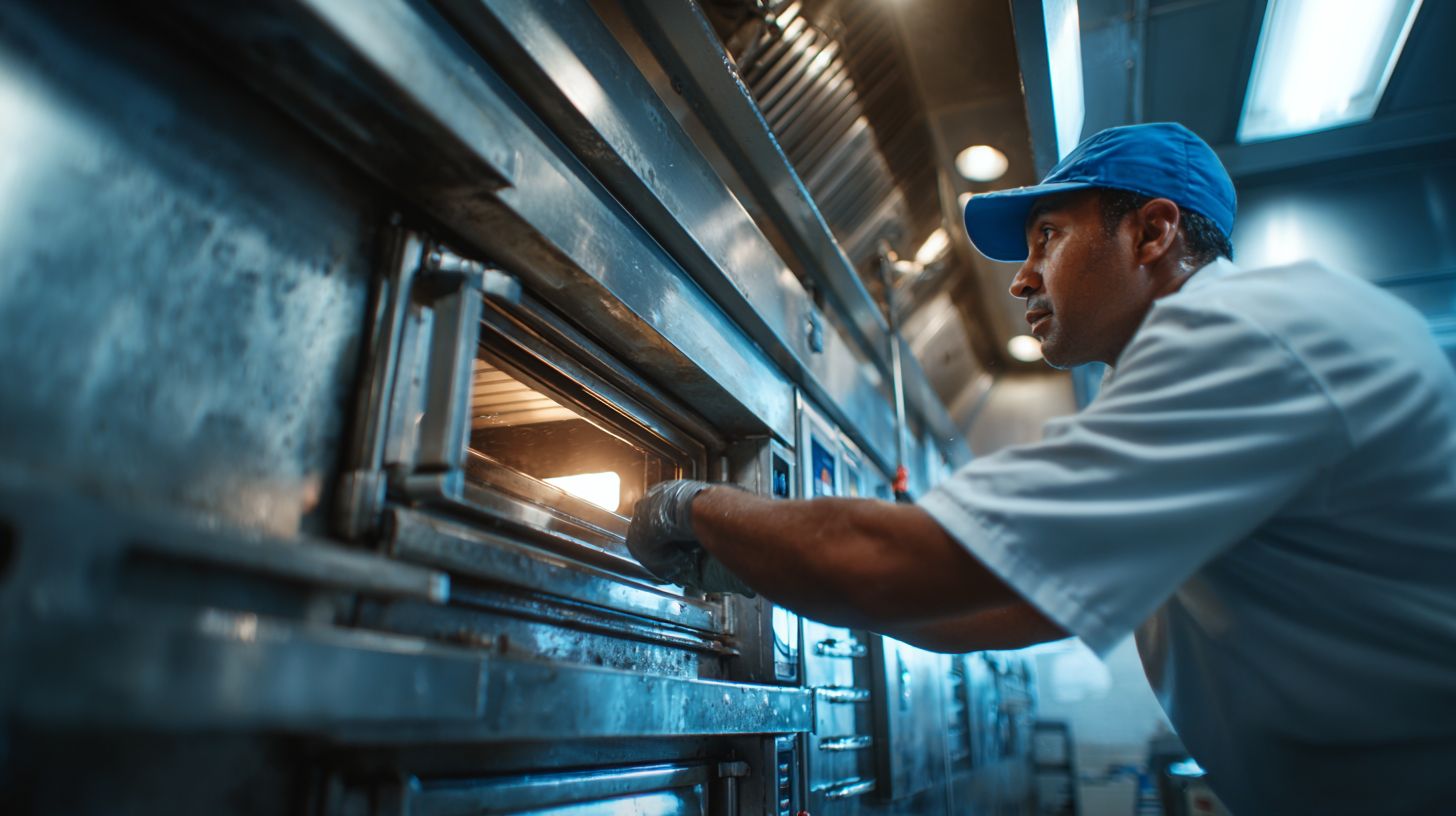


Most conversations about hood cleaning start and end with fire risk. That is understandable because fire is the consequence that gets the most attention, shows up in insurance documents, and sits at the center of every regulatory standard governing commercial kitchen ventilation. But treating hood cleaning as purely a fire prevention measure misses something that becomes obvious to anyone who has worked in, managed, or maintained a commercial kitchen for any length of time.
The exhaust system is not a standalone component. It sits at the intersection of nearly every other system in the kitchen, affecting air quality, temperature stability, cooking performance, equipment longevity, and even how the rest of the building’s cleanliness holds up over time. Understanding those connections is what separates kitchens that maintain their hood cleaning schedule because they have to from kitchens that maintain it because they understand what the exhaust system is actually doing every time service runs.
This article is about that broader picture. Not just what hood cleaning prevents, but what it actively supports across every part of a kitchen that depends on having a functioning exhaust system behind it.
The easiest way to understand what the exhaust system does is to think of it as the kitchen’s respiratory system. Just as the lungs move air through the body, removing waste gases and drawing in fresh oxygen, the exhaust system moves air through the kitchen, removing heat, grease-laden vapor, combustion byproducts, and moisture before they accumulate to levels that affect the environment and the people working in it.
That analogy holds in another way too. When the respiratory system is compromised, the effects are not isolated to one area of the body. Everything that depends on adequate oxygen exchange begins to function below its best. The same is true of the exhaust system. When grease accumulation restricts airflow through the ductwork and fan, the effects ripple outward into every system that depends on proper air movement to function as designed.
Cooking equipment depends on adequate air exchange to maintain stable combustion and consistent cooking temperatures. Refrigeration units near the cooking line depend on the exhaust system pulling ambient heat away from their operating environment. Staff depend on the exhaust system to keep the breathing zone clear of cooking vapor and combustion gases. The building itself depends on the exhaust system maintaining the pressure balance that prevents grease-laden air from migrating into areas it was not designed to reach.
Understanding what kitchen exhaust hood cleaning actually covers as a full-system service is the starting point for understanding why the interval matters beyond the visible filter and plenum area that most operators think of when they picture the hood.
There is a direct and often underappreciated relationship between the condition of the exhaust system and the overall cleanliness of the kitchen environment. It shows up in the grease film that accumulates on surfaces faster in some kitchens than others, in the speed at which walls and ceilings near the cooking line collect residue, and in the general feel of a kitchen that seems to stay cleaner between deep cleans versus one that requires constant attention.
When the exhaust system is working efficiently, grease-laden vapor is pulled away from the cooking surface quickly and captured before it can migrate into the broader kitchen environment. When the system is partially obstructed by grease accumulation and not drawing air as effectively as it should, more of that vapor lingers in the kitchen air, settles on surfaces, and becomes the film that kitchen staff clean off walls, equipment, and shelving on a regular basis.
This means the exhaust system’s condition affects the workload of every cleaning effort in the kitchen. A well-maintained hood system reduces the rate at which grease migrates to other surfaces. A neglected one increases it, adding to the ongoing cleaning burden in ways that compound across service after service. The connection between a functional exhaust system and effective janitorial and facility cleaning is not theoretical. It shows up in how long surfaces stay clean and how much effort routine maintenance requires.
Kitchens that approach cleaning holistically — understanding that the exhaust system is either making the rest of the kitchen easier or harder to keep clean — are kitchens that make better decisions about both their hood cleaning schedule and their broader maintenance approach.

This connection is rarely discussed in the context of hood cleaning, but it is one that cooks and kitchen managers notice in practice even when they do not always trace it back to the exhaust system.
Cooking quality in a commercial kitchen depends heavily on consistent temperatures and stable combustion in gas equipment. Both of those conditions are affected by the pressure dynamics that the exhaust system creates and maintains. When the exhaust fan is drawing air efficiently through a clean system, it creates a controlled pressure differential across the cooking line that supports stable burner performance and consistent heat distribution.
When grease accumulation reduces airflow through the ductwork, the pressure dynamics in the cooking environment change. Gas burners that depend on adequate air movement for proper combustion can begin running differently, producing inconsistent heat output that shows up as uneven cooking results. The effect is subtle at first, the kind of thing a cook notices as a slight change in how equipment performs rather than an obvious failure, but it accumulates over time as the system degrades further.
Heat management is the other cooking quality factor that ties directly to exhaust system performance. A kitchen where the hood is not drawing heat away from the cooking surface effectively runs hotter along the line than the same kitchen with a clean, functioning system. That ambient temperature difference affects how products cook near the surface, how quickly fats reach smoking point, and how stable the cooking environment remains during a busy service period.
Understanding the hidden costs that build up when hood cleaning gets pushed back gives a more complete picture of how cooking performance connects to exhaust system condition over time.
The right cleaning interval for any given kitchen is determined by what that kitchen actually does, not by a generic schedule applied regardless of cooking method, volume, or equipment type. This is one of the most practically important things for operators to understand about hood cleaning, because applying the wrong interval — either too infrequent for the kitchen’s actual grease load or unnecessarily frequent for a low-volume operation — has real operational and cost consequences.
Cooking method is the biggest variable. Equipment that produces high volumes of grease-laden vapor, including open-flame charbroilers, deep fryers, and woks, loads the exhaust system at a rate that bears almost no relationship to the rate produced by ovens, steam equipment, or combination cookers. A kitchen built around charbroil cooking is fundamentally different from a bakery or a prep kitchen in terms of what the exhaust system is managing per hour of operation.
Volume and operating hours multiply the effect of cooking method. A kitchen running high-volume charbroil cooking across twelve or more hours of daily service generates grease load at a rate that makes quarterly cleaning insufficient. The same equipment running four hours a day at moderate volume is a genuinely different maintenance situation.
The table below outlines how these variables translate into practical cleaning intervals, using the NFPA 96 framework as the baseline.
Kitchen Profile | Cooking Equipment Type | Daily Operating Hours | Recommended Cleaning Frequency |
High-volume restaurant, full service | Charbroilers, fryers, open flame | 10 or more hours | Monthly |
High-volume restaurant, full service | Mixed equipment including fryers | 8 to 12 hours | Every 6 to 8 weeks |
Moderate-volume restaurant | Mixed cooking equipment | 6 to 10 hours | Quarterly |
Fast casual, limited frying | Griddles, ovens, limited open flame | 8 to 12 hours | Every 4 to 6 months |
Pizza, oven-forward kitchen | High-temperature deck or conveyor ovens | 8 to 10 hours | Quarterly to every 6 months |
Low-volume or seasonal facility | Standard commercial equipment | 4 hours or fewer | Annually |
Any kitchen with solid fuel equipment | Wood, charcoal, or similar burning equipment | Any volume | Monthly regardless of other factors |
These intervals are starting points, not fixed rules. A kitchen whose filters are reaching visible saturation significantly before the next scheduled service date is a kitchen telling its operator that the interval needs adjustment. The schedule should track the kitchen’s actual grease production, not the other way around.
Hood cleaning does not exist in isolation from the rest of a building’s maintenance needs. The exhaust system runs through the building structure, connects to rooftop equipment, and its condition affects the condition of surrounding building components in ways that have direct implications for facility maintenance decisions.
Grease that migrates past inadequately cleaned sections of ductwork can reach areas of the building structure that are not designed to manage it. Rooftop surfaces around exhaust fan housings are a common example. Grease overflow from a fan housing that has not been serviced builds up on roofing materials, accelerating their degradation and creating a secondary fire risk outside the kitchen itself. The roofing repairs that result from this pattern are a facility maintenance cost that traces back to the exhaust system, even though the invoice will say “roofing repair” rather than “hood cleaning consequence.”
Exhaust fan bearings and motor components that are running hot due to grease-induced resistance accumulate wear at a rate that shortens service life meaningfully. Fan motor replacement on a unit that has been running against grease resistance for multiple service cycles is a maintenance event that could have been deferred significantly with consistent cleaning. The facility repair picture in a kitchen with a deferred hood cleaning history tends to include these patterns at higher rates than the same kitchen maintained on schedule.
Access panel gaskets and duct connections that are subjected to grease-accelerated degradation require attention sooner than they would in a maintained system. These are the kinds of maintenance details that only become visible during a thorough service but that, when addressed consistently, prevent the bigger repair events they would eventually lead to if left unattended.
The exhaust system’s role in kitchen sanitation extends beyond fire risk and cooking performance into the daily sanitation standards that health departments assess during inspections. This is an area where many operators understand the regulatory requirement but fewer understand the underlying mechanism connecting exhaust system condition to food safety standards.
Grease-laden air that the exhaust system fails to capture efficiently migrates into the broader kitchen environment and settles on food contact surfaces, preparation areas, and storage zones. The same air movement patterns that are supposed to draw contaminated air away from the cooking area when the system is working properly become vectors for spreading contamination when the system is not drawing efficiently. Health inspectors who find grease accumulation in areas removed from the cooking line are often looking at a symptom of exhaust system performance degradation rather than an isolated cleaning failure.
The air quality dimension connects directly to food safety. Cooking vapor and aerosols that the exhaust system should be capturing before they settle are carrying grease particles, moisture, and combustion residue that contaminate surfaces. Keeping those particles captured and removed from the kitchen environment is what the exhaust system is designed to do, and what it stops doing effectively as grease accumulation builds up inside the system over time.
For a more detailed picture of what specifically happens to kitchen operations as hood cleaning gets delayed, the pattern of sanitation impact follows the same progressive accumulation that affects safety, equipment, and air quality.

Commercial kitchen work is physically demanding under any conditions. The exhaust system’s job includes making those conditions as manageable as the kitchen design allows, and when it is not doing that job effectively, the people working the line feel it before it registers anywhere else.
Heat is the most immediate and consistent effect. A kitchen where the exhaust system is not drawing heat away from the cooking surface is a kitchen running at a higher ambient temperature along the line than the equipment specifications and ventilation design intended. That temperature difference does not produce an obvious failure. It makes a long shift harder. It adds to the fatigue that accumulates across a full service. Over weeks and months, it is part of what makes some kitchens harder to work in than others for reasons that staff feel but cannot always name.
Air quality follows a parallel pattern. The exhaust system’s role in keeping the breathing zone clear of cooking vapor, grease particulate, and combustion gases is not visible when it is working. It becomes noticeable when it is not. A kitchen where the air feels heavier and harder to breathe during service, where eyes water more than they should, where the smell of the cooking environment carries more into the dining area or the back of house than expected, is often a kitchen where exhaust system performance has degraded enough to affect ambient air quality in ways that are occupationally significant.
The insight into what most kitchens don’t realize about hood cleaning until it starts affecting daily work is most often learned through exactly this pattern: the working environment changing in ways that are gradual enough to not raise alarms but significant enough to affect how the kitchen functions day to day.
Not every section of a commercial kitchen generates the same exhaust system demand, and understanding how different cooking zones contribute to grease load helps operators think more clearly about where their cleaning priorities sit and how their system’s condition connects to specific equipment decisions.
The table below maps common cooking zones to their exhaust system impact and what that means practically for maintenance decisions.
Cooking Zone | Primary Equipment | Grease Load Level | Impact on Cleaning Interval | Notes on System Impact |
Fry station | Deep fryers, pressure fryers | Very high | Shortens interval significantly | Oil vapor migrates deeply into ductwork |
Char and grill station | Charbroilers, open-flame grills | Very high | Shortens interval significantly | Heavy particulate and grease, dense deposits |
Sauté and range | Open burners, range tops | High | Moderate interval reduction | Consistent grease production across service |
Pizza and deck oven station | High-temp deck ovens, conveyor ovens | Moderate | Standard interval often appropriate | Particulate-heavy but lower oil content |
Wok station | High-BTU wok ranges | Very high | Shortens interval to monthly in many cases | Rapid high-heat cooking produces intense vapor |
Prep and cold station | Minimal or no cooking equipment | Low | Minimal direct impact | Downstream position means it receives migrating vapor |
Bakery and pastry | Convection ovens, deck ovens | Low to moderate | Longer intervals generally appropriate | Lower oil content, slower accumulation |
Commercial kitchens in Houston operate in environmental conditions that add a layer of complexity to exhaust system maintenance that is worth understanding separately from the standard NFPA 96 framework that most cleaning guidance is built around.
Houston’s humidity creates grease deposits that behave differently from deposits in drier climates. High ambient moisture in the air that moves through the exhaust system interacts with grease vapor to produce accumulations that are stickier, denser, and more adhered to interior duct surfaces than equivalent deposits in low-humidity environments. The practical consequence is that the same grease load that produces a relatively manageable deposit in a dry climate produces a significantly more tenacious one in Houston, affecting both how quickly the system reaches a level that impairs airflow and how much labor is required to restore it to clean once cleaning does occur.
Summer operating conditions in Houston place additional demand on exhaust systems during the months when heat management is already the highest priority. Fans working against the combined resistance of grease accumulation and elevated ambient temperatures are running in conditions that accelerate wear and reduce the efficiency margin that a clean system would provide.
Kitchens in the Commercial Facility Maintenance Services in Houston, TX service area that factor these regional conditions into their maintenance planning are working from a more accurate picture of what their exhaust system is actually managing across the year. For operators who want to understand more about how Houston’s specific conditions shape the kitchen maintenance picture over time, that regional context provides a useful framework for making interval and scope decisions that reflect local operating realities rather than generic national guidance.
Before moving into the frequently asked questions, these foundational points summarize the key connections this article has covered and provide a framework for thinking about hood cleaning in the broader context of kitchen operations.
The exhaust system affects cooking performance, not just safety. Pressure dynamics, heat management, and combustion stability all depend on the exhaust system drawing air efficiently.
Grease migration from a poorly performing exhaust system increases the cleaning burden across the entire kitchen, not just at the hood level.
The relationship between exhaust system condition and staff working environment is real but gradual, making it easy to normalize conditions that are actually worse than a maintained system would produce.
Cleaning interval is a variable that should reflect the kitchen’s actual cooking profile rather than a generic schedule applied regardless of equipment type and volume.
The facility maintenance consequences of deferred hood cleaning extend beyond the exhaust system itself into roofing components, fan motors, and duct connections that degrade faster when the system is not serviced consistently.
Hood cleaning and broader facility cleanliness are connected systems. The exhaust system is either supporting or undermining every other cleaning effort in the kitchen depending on how well it is functioning.

How does hood cleaning affect the rest of a commercial kitchen beyond fire prevention?
The exhaust system’s condition directly affects cooking temperature stability, ambient air quality in the kitchen, the rate at which grease migrates to other surfaces, refrigeration equipment operating conditions, and the overall cleanliness burden across the kitchen environment. A well-maintained hood system actively supports every other kitchen system that depends on proper air movement. A degraded system creates drag across all of those systems simultaneously, often in ways that are gradual enough to normalize before they are recognized as exhaust system problems.
Why does hood cleaning affect how clean the rest of the kitchen stays?
When the exhaust system is not drawing grease-laden vapor away from the cooking surface efficiently, more of that vapor remains in the kitchen air and settles on surrounding surfaces. The walls, equipment, shelving, and preparation areas near the cooking line accumulate grease residue faster in a kitchen with a degraded exhaust system than in the same kitchen with a clean, functioning one. The exhaust system is the first line of defense against grease migration across the kitchen environment, and its condition determines how much work everything else in the kitchen’s cleaning routine has to do.
Does hood cleaning affect how cooking equipment performs?
Yes, and the connection is more direct than most operators realize. Gas cooking equipment depends on adequate air movement for stable combustion. When exhaust airflow is restricted by grease accumulation, the pressure dynamics in the cooking environment change in ways that affect burner performance, heat consistency, and cooking stability. The effect is usually subtle initially, showing up as slight inconsistencies in cooking results rather than obvious equipment failure, but it compounds as the system degrades further between cleaning cycles.
How does the Houston climate specifically affect how commercial kitchen hoods should be maintained?
Houston’s high humidity causes grease deposits inside exhaust systems to form differently than in drier climates. The moisture in the air that moves through the exhaust system interacts with grease vapor to produce accumulations that are stickier, denser, and more difficult to remove than equivalent deposits in a lower-humidity environment. This means Houston kitchens reach a level of grease accumulation that impairs performance faster than the same kitchen would in a drier region, and the deposits require more thorough cleaning effort when service does occur. Applying a standard generic interval without accounting for local humidity conditions means the system is likely running beyond the point where the interval was calibrated to manage.
What is the connection between hood cleaning and facility maintenance costs over time?
Kitchens with deferred hood cleaning schedules consistently experience higher facility maintenance costs in connected areas including exhaust fan motor and bearing replacement, rooftop surface degradation from grease overflow, and wear patterns in equipment operating in thermally unstable environments. These repair events are documented individually without the exhaust system being identified as a contributing factor, which is why the connection is often missed until a systems-level assessment reveals the pattern. Consistent hood cleaning is one of the maintenance decisions with the clearest downstream impact on the broader facility repair picture, even though that impact is rarely captured in how repair costs are categorized.