


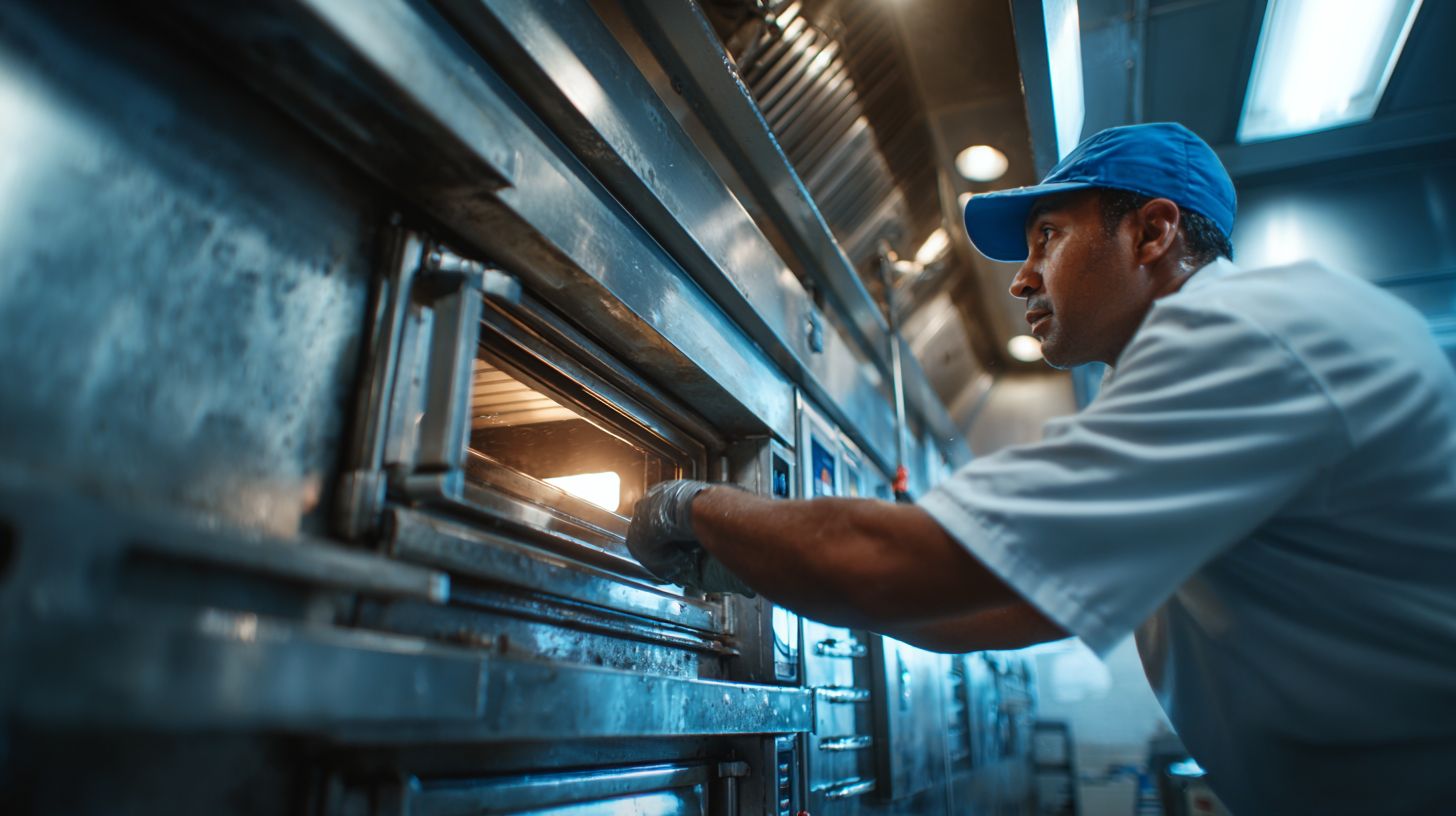


Most kitchen operators think about hood cleaning in one of two ways: as something the health department requires, or as something that gets scheduled when the filters start looking visibly bad. Both of those framings miss the bigger picture. The real cost of ignoring a consistent hood cleaning schedule does not show up on an inspection report first. It shows up in the energy bill, in the repair invoices, in the staff turnover rate, and in the slow degradation of a kitchen that used to run smoothly and now feels like it is fighting against itself.
Those costs are harder to trace back to the exhaust system because they do not arrive with a label. A refrigeration unit cycling more than it should does not come with a note saying the hood system is to blame. A cook who leaves because the line is too hot to work comfortably does not file a complaint about ductwork. The connection between hood cleaning and the broader operational health of a kitchen is real, but it is the kind of connection that only becomes visible when someone is looking for it.
This article is about what happens in the space between inspections — the day-to-day operational costs that accumulate in kitchens where hood cleaning is treated as a compliance task rather than a maintenance priority.
Commercial kitchen energy costs are significant, and most operators have some awareness of which equipment is driving consumption. The exhaust system rarely makes that list, but it should.
A clean exhaust system moves air efficiently. The fan runs at the speed it was designed to run, moves the volume of air it was engineered to move, and draws the amount of electricity that reflects normal operation. A grease-loaded system is a different machine. The fan works against internal resistance. It pulls harder to move less air. The motor runs longer and warmer to deliver results that fall short of what a clean system delivers without effort.
The energy penalty from a degraded exhaust system is not dramatic on any single day. It is the kind of cost that appears across hundreds of operating hours, accumulating gradually in a way that never triggers a specific alarm but adds real dollars to the monthly energy bill over the course of a year. Kitchens that have measured their energy consumption before and after hood cleaning service have consistently found that a clean system runs more efficiently, and that efficiency difference translates directly into operating cost.
The same logic applies to the makeup air system. When exhaust airflow is restricted, makeup air units work harder to maintain the pressure balance the kitchen needs for proper combustion and ventilation. Two systems running above baseline because one of them is obstructed with grease is a compound inefficiency that adds up faster than either system alone would suggest.
Understanding the full relationship between kitchen exhaust system maintenance and operating costs reframes hood cleaning from a line item expense into a cost-reduction measure that pays for itself across the equipment it protects.
There is a category of commercial kitchen repair that experienced technicians recognize immediately but that rarely gets documented with the exhaust system as a contributing factor. It includes refrigeration compressors that wear out ahead of schedule, cooking equipment that develops temperature consistency problems, and exhaust fans that require motor service or replacement more frequently than their expected lifespan would predict.
All of these outcomes have a documented relationship with exhaust system condition, but the repair invoices that document them do not say “caused by deferred hood cleaning.” They say “compressor replacement” or “fan motor service” or “thermostat calibration.” The kitchen pays the bill, the equipment gets fixed, and the underlying condition that contributed to the failure goes unaddressed.
Exhaust fans that run hot because grease accumulation forces them to work above their design parameters have shorter bearing and motor life than fans running clean. Refrigeration units positioned near a cooking line where heat is not being vented properly cycle their compressors more frequently and accumulate wear faster than units in a properly ventilated environment. Cooking equipment that operates in a thermally unstable environment because the hood is not drawing heat away effectively develops calibration issues that show up as inconsistent cooking results before they show up as a formal repair need.
This pattern of repair costs is preventable in large part through consistent hood cleaning, but preventing it requires connecting the dots between the exhaust system and the equipment it affects. Kitchens that approach maintenance with that systems-level awareness — understanding that facility repair needs and exhaust system condition are often connected — tend to catch the pattern earlier and spend less on repairs over time.

The table below maps the most common equipment repair scenarios in commercial kitchens to the exhaust system conditions that contribute to them. None of these are exclusive causes, but the pattern across kitchens with deferred hood cleaning is consistent enough to be worth understanding.
Equipment | Common Repair Scenario | Connection to Hood Condition | How Consistent Cleaning Helps |
Exhaust fan motor | Premature bearing wear, motor overheating | Fan running above design parameters due to grease resistance | Clean system reduces motor strain and extends service life |
Refrigeration compressor | Early cycling failure, shortened compressor life | Elevated ambient temperature from poor heat venting | Proper exhaust airflow keeps cooking zone temperatures stable |
Gas cooking equipment | Temperature inconsistency, combustion issues | Negative pressure from imbalanced exhaust affects burner performance | Balanced airflow supports consistent combustion conditions |
Makeup air unit | Filter saturation, blower strain | Overcompensating for restricted exhaust airflow | Restored exhaust efficiency reduces makeup air system load |
Fire suppression system | Nozzle clogging, system performance issues | Grease migration into areas suppression nozzles cover | Regular cleaning keeps suppression coverage areas clear |
Hood filters | Rapid saturation between cleaning cycles | Heavy grease load overwhelming filter capacity | Consistent full-system cleaning reduces filter burden |
These connections do not mean every compressor failure or fan motor replacement traces back to the hood. They mean that kitchens with deferred cleaning schedules see these repair scenarios at higher rates, and that addressing the hood system is part of addressing the conditions that drive the repair pattern.
Commercial kitchens are demanding work environments under normal conditions. The physical demands of the work, the pace of service, and the heat of the cooking line are part of the job. What is not part of the job — and what consistently affects how long staff stay and how well they perform — is a kitchen environment that is measurably worse than it needs to be because the exhaust system is not working properly.
A kitchen where the hood is not pulling heat and vapor away effectively is a hotter kitchen. Not dramatically hotter in the way that triggers a formal complaint, but consistently hotter in the way that makes a long shift harder than it needs to be. Over weeks and months, that difference in working conditions is the difference between a staff member who stays and one who looks for a line job somewhere more comfortable.
Air quality follows the same logic. Cooking vapor, grease particulate, and combustion byproducts that a functioning exhaust system would remove from the breathing zone stay in the kitchen when the system is not drawing air efficiently. Kitchen staff spend full shifts in that environment. The cumulative exposure is a real occupational health consideration that tends to get minimized until it becomes impossible to ignore.
The connection between hood cleaning and indoor air quality is one that most operators understand in principle but few measure in practice. The kitchen that measures it — even informally, by tracking how staff describe the working environment before and after a major cleaning service — tends to find a clearer relationship than expected.
Commercial kitchen insurance policies are written against a set of assumptions about how the kitchen is maintained. Those assumptions include regular hood cleaning in accordance with NFPA 96 standards. When a fire occurs in a kitchen that has documentation showing consistent, compliant hood cleaning, the insurance claim proceeds against those assumptions. When a fire occurs in a kitchen that cannot produce that documentation, the insurer has grounds to investigate whether the maintenance failure contributed to the loss.
This is not a theoretical risk. Insurance adjusters who handle commercial kitchen fire claims are trained to look at hood cleaning documentation as part of their assessment. A kitchen that has been cleaning on schedule and documenting that service is in a fundamentally different position than a kitchen that has been deferring service or relying on a provider whose documentation does not clearly record the full scope of work.
The documentation question matters for more than fire events. General liability policies and lease agreements for commercial kitchen spaces sometimes carry maintenance provisions that include exhaust system upkeep. A kitchen that cannot demonstrate compliance with those provisions is exposed to coverage gaps and lease disputes that have nothing to do with a fire occurring — they arise simply from the absence of verifiable maintenance records.
Keeping a clean, documented hood cleaning history is not just about passing the next inspection. It is about maintaining the assumptions your insurance coverage was written against.
One of the most consequential misunderstandings in commercial kitchen maintenance is the assumption that cleaning the visible hood area — the filters, the interior surfaces within arm’s reach, the grease trays — constitutes a complete hood cleaning service. It does not, and the gap between what operators sometimes receive and what the system actually requires is where the most significant risk lives.
Grease-laden vapor does not stop at the plenum. It travels through the full duct run, coating interior duct surfaces across every foot of the system’s length, and accumulates in the fan housing where heat and proximity to the motor create conditions that make deposits harder to remove and more reactive over time. A service that addresses only the accessible hood-level components leaves the duct run and fan housing untouched — which means it leaves the portions of the system with the highest fire risk and the most impact on airflow performance unaddressed.
Understanding what a complete hood cleaning service involves — and how to verify that a provider is actually delivering full-system service rather than accessible-surface cleaning — is one of the most practically valuable things a kitchen operator can do to protect both the safety and the maintenance value of the service they are paying for.
The signs that a kitchen is receiving incomplete service are often visible after the fact: fan housings that show heavy accumulation during a subsequent service, ductwork that requires significantly more effort to clean because deposits have been building undisturbed for multiple service cycles, and inspection findings that identify duct-level accumulation despite a documented cleaning history.

One of the clearest ways to understand why scope matters in hood cleaning is to look side by side at what a complete service addresses versus what a surface-level service leaves behind. The table below breaks down each component of a commercial kitchen exhaust system, what a thorough cleaning service does at each stage, and what the consequence is when that component goes unaddressed.
System Component | What a Complete Service Does | What Gets Left Behind Without It | Risk or Cost Implication |
Grease filters | Removes, degreases, and inspects filters for damage or warping | Saturated filters restrict airflow and allow grease to bypass into the plenum | Faster upstream accumulation, reduced system efficiency |
Hood plenum | Cleans all interior plenum surfaces including corners and welds | Grease pools in low points and hardens into layers that are increasingly difficult to remove | Accelerated buildup between service cycles |
Duct interior | Full interior duct cleaning across the entire run length | Grease coats duct walls across lengths that are never accessed from the hood level | Primary fire risk zone — most dangerous area to leave uncleaned |
Exhaust fan housing | Degrease fan blades, housing interior, and motor-adjacent surfaces | Grease accumulation on fan blades creates imbalance and overheating risk | Fan motor wear, reduced airflow, early mechanical failure |
Rooftop components | Clean grease collection areas, fan housing exterior, and discharge surfaces | Grease overflow onto roofing materials creates secondary fire and structural risk | Roof damage, fire risk outside the kitchen, code violations |
Access panels | Verify panel placement and condition, clean around gaskets | Improperly seated or missing panels allow grease to escape the contained system | Inspection violations, grease migration into building structure |
Grease collection cups and drains | Empty, clean, and verify drainage is clear | Overflow from full collection points migrates into areas it was designed to contain | Secondary contamination, inspection findings, slip hazards |
The gap between what a complete service covers and what a surface-level cleaning addresses is the gap between genuine maintenance and documentation that looks compliant without delivering the protection the system actually needs.
Scheduled cleaning intervals are the foundation of a sound maintenance approach, but the schedule is a minimum, not a ceiling. Kitchens that understand the signs their exhaust system is working harder than it should are kitchens that can respond to changing conditions before the accumulation reaches a level that affects safety or triggers an inspection finding.
There are specific indicators that the exhaust system is under more demand than the current schedule is addressing. Filters that reach visible saturation well before the next service date suggest the grease load has increased beyond what the interval was calibrated for. A cooking line that feels hotter than usual during service, or a kitchen where the air seems thicker and harder to work in, is a kitchen where exhaust airflow has likely degraded. A fan that sounds different — straining, louder, or cycling in a pattern that does not match normal operation — is a fan working against resistance.
Knowing the signs your commercial kitchen hood needs immediate attention before the scheduled service date is the difference between addressing a developing problem at a manageable stage and addressing it after it has affected equipment, air quality, or safety in ways that are more expensive to correct.
Commercial kitchens operating in the Houston and Katy areas face environmental conditions that affect how exhaust systems perform and how grease accumulates in ways that differ from kitchens in other parts of the country.
The humidity characteristic of the Houston climate makes grease deposits inside exhaust systems stickier and more adhesive than deposits in drier regions. Deposits that might remain relatively friable and easier to remove in a low-humidity environment become denser and more adhered to duct surfaces in humid conditions, which affects both how quickly they build to a problematic level and how much effort is required to remove them once they have set.
High ambient temperatures during Houston summers increase the thermal load on kitchen exhaust systems during the months when they are already working hardest. Fans running at elevated capacity to manage heat removal in a hot exterior environment are fans with less margin for the additional resistance that grease accumulation creates.
Kitchens across Commercial Facility Maintenance Services in Houston, TX and Commercial Facility Maintenance Services in Katy, TX that factor these regional conditions into their cleaning schedule decisions are working with a more accurate picture of what their system actually faces across the year, rather than applying a standard interval designed for conditions that do not reflect what their exhaust system operates against every day.
Not every provider who offers hood cleaning delivers the same scope of work, the same documentation standard, or the same level of familiarity with the systems they are servicing. The difference between a provider doing a thorough full-system service and one cleaning only what is easy to reach from the hood level is not always visible in the invoice or the certificate. It becomes visible later, in the condition of the system at the next service, in the documentation an inspector asks to review, or in the repair patterns that develop in equipment the system was supposed to be protecting.
Kitchens that invest in understanding what professional hood cleaning actually requires are in a better position to evaluate their providers honestly. Asking to see before-and-after documentation, verifying that the service certificate specifies the full scope of work including ductwork and fan housing, and paying attention to whether the technician accesses the rooftop fan components are practical ways to verify that the service delivered matches what the system needs.
The broader context of how hood cleaning fits into a kitchen’s overall maintenance structure — and why the cleaning decision affects far more than the exhaust system in isolation — is worth understanding for any operator making long-term decisions about how their kitchen is maintained.

What are the hidden costs of skipping hood cleaning in a commercial kitchen?
The costs that rarely get traced back to the exhaust system include higher energy bills from fans and makeup air units working against grease resistance, accelerated wear on refrigeration compressors and fan motors, a hotter and less comfortable working environment for kitchen staff, and potential insurance coverage complications when documentation of compliant maintenance cannot be produced. These costs accumulate gradually and rarely arrive with a clear label connecting them to the hood system, which is part of why they go unaddressed for as long as they do.
How does hood cleaning affect kitchen energy consumption?
A grease-loaded exhaust fan works harder to move less air than a clean fan operating under normal conditions. The motor draws more power, runs longer, and generates more heat in the process. The makeup air system compensates for the reduced exhaust efficiency by running above its baseline as well. The combined energy penalty across both systems over hundreds of operating hours adds measurable cost to the monthly energy bill in a way that a single before-and-after measurement after a cleaning service can often make visible.
Can deferred hood cleaning void a restaurant’s insurance coverage?
Insurance policies for commercial kitchens are written against the assumption that the kitchen maintains its exhaust system in accordance with applicable standards, including NFPA 96. When a fire loss occurs and the insurer reviews maintenance documentation, the absence of verifiable hood cleaning records creates grounds for the insurer to investigate whether the maintenance failure contributed to the loss. Coverage complications arising from documentation gaps are a real exposure, not a theoretical one, and they apply to any significant claim where exhaust system condition is a relevant factor.
What is the difference between cleaning the visible hood and cleaning the full exhaust system?
The visible hood area — filters, grease trays, and the interior surfaces within reach from the cooking floor — represents only a portion of the exhaust system. Grease-laden vapor travels through the full duct run and accumulates in the fan housing, often in quantities that exceed what is visible at the hood level. A service that addresses only the accessible hood components leaves the duct interior and fan housing untouched. Full-system cleaning covers every section of the exhaust path from filters to rooftop fan, which is the scope that NFPA 96 compliance and meaningful risk reduction both require.
How do Houston’s climate conditions affect how often a kitchen should schedule hood cleaning?
The high humidity characteristic of the Houston area makes grease deposits inside exhaust systems stickier and more adhesive than deposits in drier climates. This affects how quickly deposits build to a level that impairs airflow and how much labor is required to remove them when cleaning does occur. Kitchens in the Houston area that apply a generic national cleaning interval without accounting for local humidity and temperature conditions may find that their system accumulates to a problematic level before the scheduled service date. Adjusting the interval to reflect actual regional operating conditions is a more accurate approach than applying a standard that was not calibrated for the local environment.