


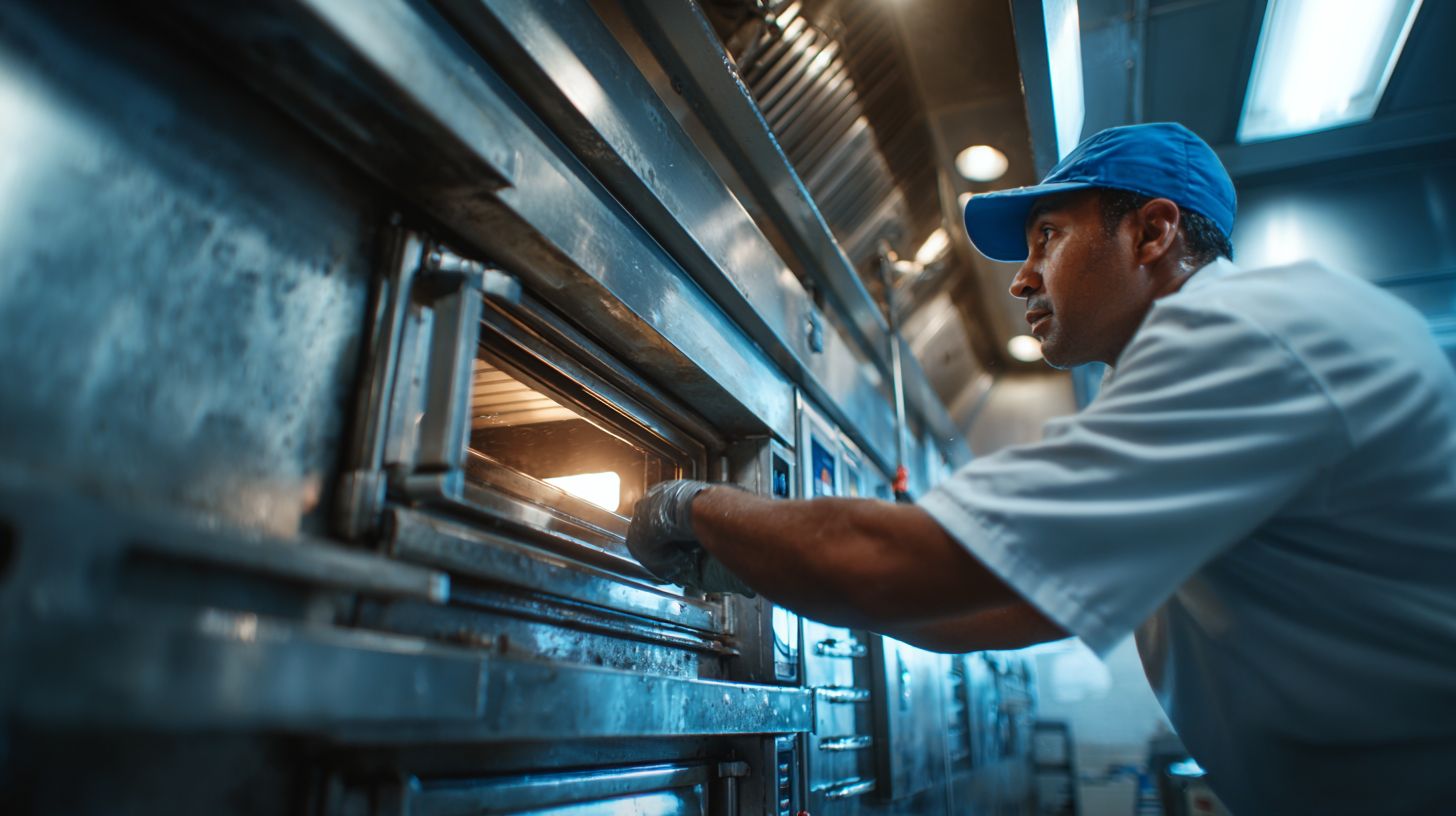


There is a version of oven maintenance that most commercial kitchens run on. The cook wipes down the door. Someone on the closing crew runs a scraper across the bottom of the deck. The racks come out for a soak every so often. And at some point, someone decides the inside of the oven is clean enough and moves on to the next task on the list.
That version of oven maintenance is not wrong, exactly. Nightly cleaning matters. But there is a category of buildup that daily cleaning does not reach — baked-on carbon, grease deposits inside burner assemblies, residue along oven walls and ceiling cavities, and accumulation in areas that most staff never open during a normal closing routine.
That is where professional commercial oven cleaning fits in, and that is also why most operators underestimate what it actually does.
Every time an oven runs, it creates a cycle. Cooking produces grease vapor, moisture, and food particulates. Some of that vents out through the exhaust system. A significant portion does not. It settles on the interior walls, the ceiling of the oven cavity, the door gaskets, the rack guides, and the burner or heating element housing.
Over multiple shifts and weeks, those thin layers compound into something heavier. The residue bakes harder with each cooking cycle, which is why oven buildup has a completely different texture than hood or duct grease. It is dense, carbonized, and in many cases fused to the surface it collected on. A wipe-down during closing will not touch it. Neither will a standard degreaser applied to a surface that was not properly prepared for deep cleaning.
This is the buildup that daily staff cleaning cannot address safely or effectively. It requires different chemistry, different tools, and technicians who know how to work inside commercial cooking equipment without damaging heating elements, gaskets, or control components. This type of service falls under the broader scope of a hood cleaning service, which covers not just exhaust systems but related kitchen equipment cleaning including commercial ovens.
One of the more overlooked consequences of oven buildup is what it does to how the equipment performs during service.
Carbon and grease deposits on oven walls and ceilings affect how heat radiates inside the cavity. A clean oven interior reflects and distributes heat more evenly. A coated one absorbs and holds it differently, which changes how food cooks even when the thermostat reads the same number. In a convection oven, buildup on or near the fan housing changes how air circulates through the cavity. In a combination oven, dirty steam generators and heat coils can affect moisture output and temperature accuracy in ways that are hard to diagnose without pulling the equipment apart. In a deck oven, carbon buildup on the stone or deck surface changes how heat transfers to the product sitting directly on top of it.
None of these effects are catastrophic on their own. But kitchen teams notice the symptoms without always connecting them to oven cleanliness. Baked goods that come out inconsistently from one day to the next. Roasts that take longer than they should. Smoke at temperatures that did not used to produce it. A persistent background smell during service that the team has gotten used to but never really investigated. These are performance issues, and they often trace back to equipment that has not been professionally cleaned in longer than anyone can remember.
This connects directly to a broader dynamic that plays out across the entire kitchen. Dirty equipment creates unpredictable results, and food quality in a commercial kitchen is shaped by factors that are easy to overlook until the consequences start showing up in what lands on the plate.

Commercial ovens operate at high temperatures continuously through long shifts. That combination — persistent heat plus accumulated grease and carbon — carries fire risk that most kitchen teams have a general awareness of but rarely examine closely until something forces the issue.
Grease deposits inside an oven cavity can ignite if temperatures reach the right threshold or if a flare-up inside the cooking chamber contacts heavily carbonized residue. Burner assemblies with grease buildup around the housing are at elevated risk. The same applies to areas behind removable panels or near heating elements in electric units. These are not theoretical hazards. They are the reason that professional kitchen equipment cleaning exists as a service category.
The costs of postponing kitchen equipment maintenance tend to compound over time in a pattern that is hard to see from inside the day-to-day operation. The longer buildup sits, the harder it becomes to remove — and the longer the risk goes unaddressed. That pattern has consequences that go well beyond what shows up on the cleaning bill, which is something any kitchen that has worked through the hidden costs that come with putting off kitchen maintenance understands from experience.
There is a meaningful difference between what a staff cleaning addresses and what a professional service actually does to the equipment.
A professional commercial oven cleaning typically includes the oven interior walls, ceiling, and floor. Racks and rack guides are removed and cleaned separately. The door, door gaskets, and door hinges are addressed. Burner assemblies or heating elements are cleaned in a way that removes buildup without damaging components. In convection units, the fan and fan housing are part of the scope. In combination ovens, the steam generator and related components get attention depending on condition and access.
The process also involves a level of inspection that staff cleaning simply does not produce. A technician cleaning a commercial oven will often identify things that daily cleaning obscures — worn gaskets that are no longer sealing properly, damaged heating elements that are affecting temperature consistency, corroded panels, or components that need attention before they become a more expensive repair. That kind of visibility is one of the underappreciated returns of putting commercial oven cleaning on a regular schedule rather than waiting for something to fail.
Most operators who have been through a thorough professional oven cleaning for the first time describe the same experience: they did not realize how much had accumulated, and they did not realize how much of what they assumed was normal kitchen performance was actually equipment operating below where it should have been.
Not every oven accumulates at the same rate, and understanding which types tend to require more frequent professional cleaning helps operators set realistic maintenance schedules.
Deck ovens used for high-volume pizza or bread production are among the fastest to accumulate carbonized buildup because of the direct contact between food and the cooking surface, combined with the continuous high temperatures those ovens maintain. Convection ovens that run through long shifts in high-volume kitchens pull grease vapor through the fan system continuously, which means buildup develops not just on the walls but inside the fan housing and on the fan blades themselves. Combination ovens that cycle between steam and dry heat create conditions where grease and moisture combine and then bake onto interior surfaces in a layer that is particularly dense and difficult to remove. Rotisserie units, if used frequently, accumulate drip-based grease that falls and bakes onto the interior floor and lower walls with each rotation cycle.
High-volume operations running any of these oven types are typically looking at professional cleaning every six to eight weeks. Lower-volume kitchens with lighter use may manage on a quarterly schedule. The right interval depends on cooking volume, oven type, and what the equipment looks like when it is opened for inspection.
The honest answer is that oven cleaning is disruptive. It takes equipment offline. It requires coordinating around kitchen hours. It produces a level of attention to an appliance that feels routine until the technician pulls out the oven racks and shows the operator what has collected behind them.
Most commercial kitchens run on tight operating windows. There is rarely a natural moment where the oven sits idle for long enough that no one notices when it gets taken out of rotation for a few hours. That scheduling friction is real, and it is the primary reason professional oven cleaning gets deferred. Something else always feels more urgent.
The problem is that deferring the cleaning does not pause the buildup. It just means the next service has more to address, the equipment runs dirtier in the meantime, and the accumulated risk continues to grow without much visible signal that anything is wrong. The same delayed-consequences pattern that plays out when hood cleaning gets pushed back further than it should applies just as directly to oven maintenance — the effects are gradual, the equipment keeps running, and the accumulation goes unnoticed until it either fails or gets inspected.
Kitchens that get ahead of this tend to solve it the same way: they stop scheduling oven cleaning reactively and start treating it like a fixed maintenance item. The thinking behind building a hood cleaning schedule that actually matches how the kitchen operates translates directly to oven service intervals — identify how hard the equipment works, set a realistic frequency, and put it on the calendar before something forces the issue.
Commercial cooking produces substantial moisture — from proteins releasing liquid, from vegetables cooking, from sauces reducing, from steam-producing equipment, and from the condensation that forms when hot food meets cooler kitchen air. The exhaust system’s continuous air movement draws this moisture out of the kitchen environment, preventing it from accumulating to levels that affect cooking conditions.
When exhaust system airflow is reduced, moisture removal is reduced proportionally. The humidity of the cooking environment rises. For cooking processes that depend on specific moisture conditions for quality outcomes — developing a crust on seared protein, achieving dry caramelization in sautéed vegetables, maintaining appropriate texture in fried foods — elevated ambient humidity in the cooking zone interferes with the intended process.
This is one of the more surprising mechanisms through which hood cleaning interval affects food quality, because moisture management is not intuitively connected to the exhaust system for most kitchen operators. But the relationship is direct: a clean, efficiently running exhaust system removes moisture from the cooking environment as a natural consequence of its airflow function, and that moisture removal is part of what makes certain cooking processes work the way they are supposed to work.

Commercial oven cleaning does not exist in isolation. It is one piece of a kitchen maintenance picture that includes exhaust system cleaning, equipment inspections, grease containment, and fire suppression system servicing. Each of those pieces addresses a different part of the same underlying problem: grease and carbon buildup that accumulates in a working kitchen and creates risk, performance issues, and compliance exposure if it is not managed on a consistent schedule.
For Houston commercial kitchens, the heat and operating demands that come with running a full-service kitchen in this climate make that maintenance picture even more important. Commercial oven cleaning in Houston TX covers exhaust systems, equipment cleaning, and related services for restaurants, hotels, healthcare food service operations, schools, and other commercial kitchen facilities across the greater Houston area.
Commercial kitchen fires remain a serious risk across the food service industry. The NFPA 96 standard for ventilation control and fire protection of commercial cooking operations outlines the minimum requirements that govern how cooking systems are maintained, and the underlying principle it reflects — that grease accumulation creates fire risk that professional cleaning is designed to manage — applies to cooking equipment just as directly as it applies to exhaust systems.
A kitchen that is maintaining its hood and exhaust system on schedule but has not had its ovens professionally cleaned in over a year is only managing part of the problem. A complete kitchen maintenance plan addresses both.
What is the difference between staff cleaning and professional commercial oven cleaning?
Staff cleaning covers the surfaces and components that kitchen workers can safely reach during a normal closing routine — the door, the oven bottom, visible interior walls, and racks. Professional oven cleaning addresses areas that require equipment disassembly or chemical treatment, including burner assemblies, heating element housing, interior cavities above and behind cooking surfaces, fan components in convection units, and areas behind removable panels. The goal is to remove the carbonized buildup that accumulates over time in places that daily cleaning does not reach.
How do I know when my commercial oven needs professional cleaning?
Visible smoke at normal operating temperatures, inconsistent cooking results, a persistent burnt odor during service, or an interior that looks heavily carbonized when racks are removed are all indicators that professional cleaning is overdue. Most kitchens that wait for visible symptoms are already past the point where preventive scheduling would have been the better approach.
Does oven cleaning affect fire suppression system requirements?
Professional oven cleaning addresses the equipment itself, not the suppression system. However, clean cooking equipment is part of the broader kitchen fire safety picture. Suppression systems are designed to respond to ignition events — clean equipment reduces the likelihood of those events in the first place. Kitchens should maintain both their equipment cleaning schedule and their suppression system inspection schedule independently.
Can commercial oven cleaning be done overnight or after hours?
Yes. Most commercial kitchens schedule oven cleaning after close or on days with reduced kitchen activity to avoid disrupting service. After-hours scheduling is available to minimize operational impact for Houston-area restaurants and food facilities.
How does oven cleaning relate to hood and exhaust cleaning?
They are separate services but closely related. Oven cleaning handles the cooking equipment itself. Hood and exhaust cleaning handles the ventilation system that removes grease vapor produced during cooking. Both address grease accumulation in different parts of the kitchen, and both carry fire safety and compliance implications. Many kitchens benefit from coordinating both services on the same recurring maintenance schedule.