


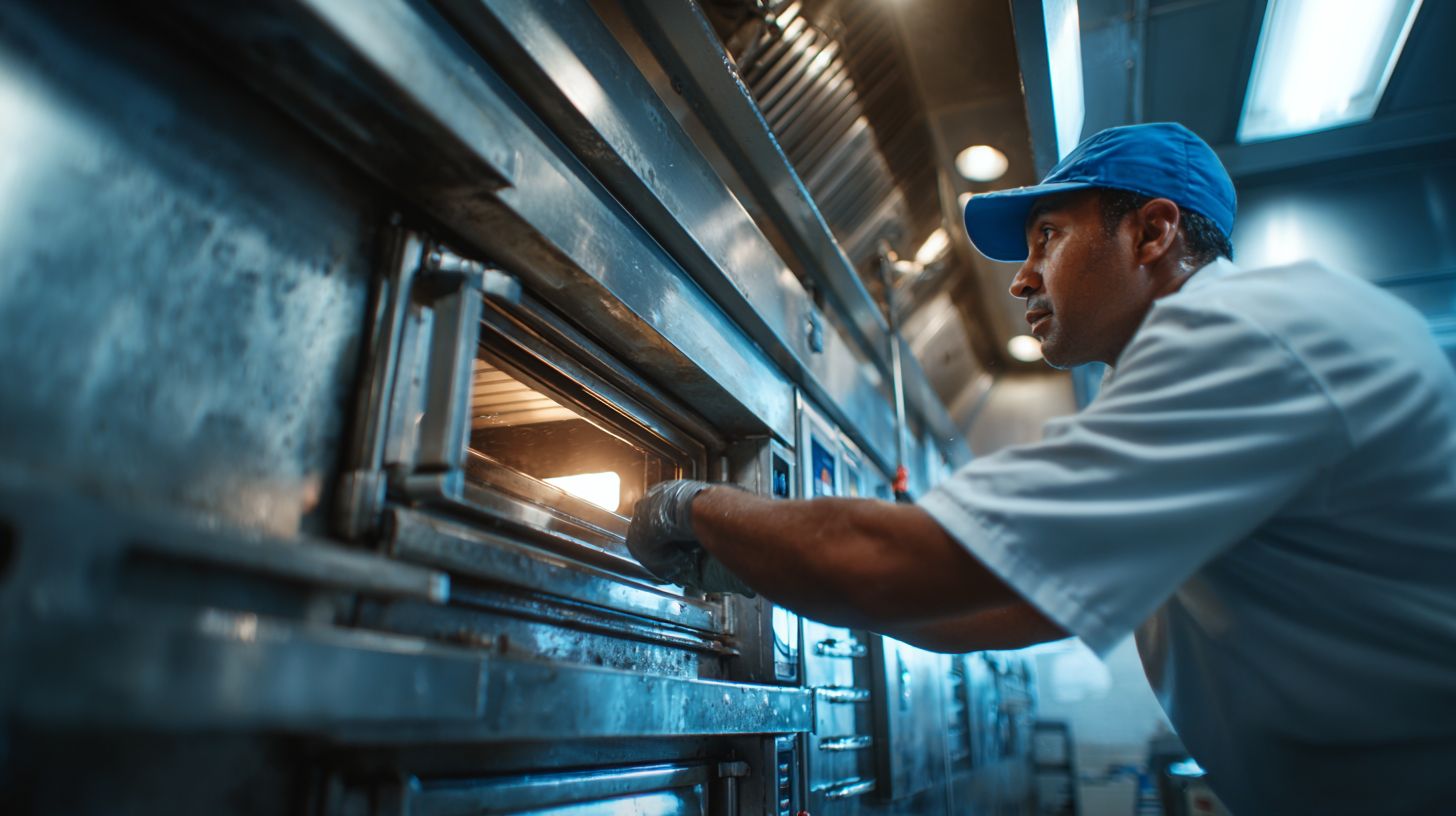


There is a particular kind of pressure that builds in a commercial kitchen over time that has nothing to do with rush hour service or a packed reservation list. It builds quietly, inside the ductwork above the cooking line, inside the filters that catch grease before it travels deeper into the exhaust system, inside the fan housing that moves contaminated air out of the building dozens of times every hour. Most kitchen operators never see it building. They only notice it when something goes wrong.
Delayed hood cleaning is one of the most consistently underestimated maintenance issues in commercial kitchens, not because operators are careless but because the consequences of delay do not arrive all at once. They arrive gradually, in the form of equipment that runs harder than it used to, inspections that produce unexpected findings, and a kitchen environment that feels heavier and more demanding than it once did. Understanding what actually happens during that delay, and why the timeline matters more than most operators realize, changes how a kitchen approaches its maintenance calendar.
Grease does not accumulate in a way that is easy to observe from the cooking floor. What is visible at the filter level is only the surface portion of a deposit that travels upward with every cooking cycle, coating the interior surfaces of the plenum, the ductwork, and eventually the fan housing itself. The portion that is most dangerous is the portion that is least visible.
Commercial kitchen exhaust systems are designed to capture and remove grease-laden vapor before it reaches areas where ignition is a risk. That design works effectively when the system is clean. As grease deposits build up across the interior surfaces, the system’s ability to move air efficiently degrades. The fan works against increasing resistance. The filters saturate more quickly between service intervals. The ductwork that was designed to carry air carries an increasing proportion of accumulated fuel instead.
This is the accumulation problem: grease does not just sit in the system harmlessly waiting to be cleaned. It changes the system’s behavior, reduces its performance, and increases the risk profile of the kitchen at every stage of buildup. A kitchen that delays hood cleaning is not simply deferring a maintenance task. It is allowing the risk profile of its cooking environment to rise incrementally with every service it runs.
Understanding how grease buildup in kitchen exhaust systems impacts restaurant safety and efficiency is the first step toward understanding why the cleaning interval is a safety decision, not just a scheduling preference.
The exhaust system does not operate in isolation. It works in relationship with every piece of cooking equipment below it, and the condition of the hood affects how hard that equipment has to work to maintain cooking temperatures.
When airflow through the exhaust system is restricted by grease accumulation, the pressure differential that draws heat and vapor away from the cooking surface changes. Equipment that normally cooks at stable temperatures begins cycling differently. Heat that should be venting upward stays in the cooking zone longer. The ambient temperature of the line rises, placing additional thermal load on refrigeration units nearby and making the working environment more demanding for kitchen staff.
Makeup air systems, which supply fresh air to replace what the exhaust fan removes, also work harder when exhaust airflow is compromised. Imbalanced systems create negative pressure conditions that can affect combustion in gas equipment and interfere with proper ventilation across the kitchen as a whole.
The cumulative equipment wear from these conditions is real and measurable over time. Kitchens that maintain consistent hood cleaning schedules typically see lower equipment maintenance costs and more predictable cooking performance than kitchens that delay cleaning until compliance concerns make it unavoidable. For kitchens dealing with equipment performance issues alongside ventilation concerns, understanding how facility repair and maintenance connects to exhaust system health provides a more complete picture of what affects daily operations.

The relationship between hood cleaning intervals and kitchen equipment behavior follows a pattern that is consistent across different kitchen types and sizes. The table below outlines how key equipment areas respond as grease accumulation increases between cleaning cycles.
Equipment Area | Early Accumulation Stage | Moderate Accumulation Stage | Heavy Accumulation Stage |
Cooking line temperatures | Stable, minimal change | Slight heat retention near cooking surface | Noticeable temperature variance, inconsistent cooking |
Exhaust fan | Operating within normal range | Running harder to maintain airflow | Audible strain, reduced air movement |
Makeup air system | Balanced pressure | Mild negative pressure developing | Imbalanced pressure, affecting combustion |
Nearby refrigeration | Unaffected | Slight thermal load increase | Elevated compressor cycling, higher energy use |
Filters | Collecting normally | Saturating faster between cleanings | Requiring more frequent manual attention |
Kitchen ambient temperature | Normal working range | Slightly elevated during peak cooking | Significantly hotter along the line |
This progression is why the cleaning interval functions as an equipment protection decision as much as a safety and compliance one. The damage to equipment performance does not announce itself suddenly. It arrives across the moderate and heavy stages in ways that operators often attribute to individual equipment issues rather than recognizing the exhaust system as the common factor.
The fire risk associated with grease accumulation in commercial kitchen exhaust systems is not theoretical. Grease fires that originate inside exhaust ductwork are among the most difficult fires for suppression systems to control because the fire has access to a continuous fuel source spread across a large internal surface area that suppression agents cannot easily reach from the hood level.
NFPA 96, the standard that governs ventilation control and fire protection in commercial cooking operations, sets cleaning frequency requirements based on cooking volume and the type of cooking being performed. High-volume kitchens, or those using wood-burning equipment or producing particularly heavy grease loads, are required to clean more frequently than lower-volume operations. These requirements exist because the research on commercial kitchen fire patterns consistently points to grease accumulation in exhaust systems as a primary contributing factor.
What is less commonly understood is that the fire risk associated with delayed cleaning does not follow a linear curve. It accelerates. A kitchen that has gone slightly past its cleaning interval has a modestly elevated risk profile. A kitchen that has gone significantly past its interval has a risk profile that is disproportionately higher, because the grease deposits at that stage are thicker, cover more surface area, and are more likely to contain layers that have oxidized and become more reactive than fresh deposits.
The interval matters precisely because of this acceleration effect. Maintaining the schedule is not just about keeping the system technically compliant. It is about keeping the risk profile within a range that the kitchen’s fire suppression and detection systems were designed to address.
Health department inspectors and fire marshals approach kitchen hood systems with a specific framework of concerns, and kitchens that understand what drives those concerns are better positioned to maintain inspection readiness rather than preparing reactively when an inspection is scheduled.
Fire safety inspectors focus on grease accumulation levels across the entire exhaust system, not just the visible filter area. A kitchen that cleans its filters regularly but does not service the full duct run and fan housing can present a clean appearance at the hood level while having significant accumulation in less visible areas that an inspector with access to the system will identify. Full-system cleaning, documented with the certificates that verify the scope and date of service, is what satisfies the inspection standard. Partial cleaning does not.
Health department inspectors consider the exhaust system in the context of overall kitchen sanitation and air quality. A hood system that is cycling grease-laden air inefficiently affects the cooking environment in ways that have direct relevance to food safety standards. The connection between ventilation system condition and kitchen sanitation compliance is more direct than many operators realize until an inspection finding makes it explicit.
Maintaining a documented cleaning history with verifiable service records is the practical foundation of inspection readiness. Kitchens that can produce that documentation without scrambling for it are kitchens that have internalized their cleaning schedule as an operational standard rather than treating it as a reactive compliance measure.
The most common mistake kitchens make in scheduling hood cleaning is applying a generic interval rather than one calibrated to their actual cooking operation. NFPA 96 provides guidance that establishes minimum frequencies based on cooking volume and equipment type, but the right interval for a specific kitchen depends on factors that a standard schedule cannot fully account for.
Cooking method matters significantly. Wood-burning equipment, charbroilers, and woks produce grease-laden vapor at much higher rates than steam equipment or ovens. A kitchen running heavy charbroil cooking several hours a day will accumulate grease at a rate that bears no resemblance to a kitchen running primarily baked preparations, even if both kitchens operate similar hours.
Volume consistency also matters. A kitchen running at high capacity five or six days a week is generating cumulative grease load much faster than a kitchen running the same menu at moderate volume. Cleaning intervals that were appropriate for a kitchen at one volume level may need to be shortened when the operation expands.
Seasonal variation affects some kitchens significantly, particularly those with catering operations or seasonal menu shifts that change the cooking volume or methods during certain periods. A kitchen that tracks its grease accumulation visually between service visits from its cleaning provider is in the best position to identify when its interval needs adjustment rather than waiting for a finding to prompt the change.

NFPA 96 establishes minimum cleaning frequencies based on the cooking load and equipment type a kitchen operates. The table below summarizes how those categories translate into practical scheduling for different kitchen profiles.
Kitchen Type | Cooking Equipment Profile | Minimum Cleaning Frequency | Notes |
High-volume cooking operations | Wood-burning, charbroilers, woks, 24-hour operations | Monthly | Heaviest grease load, fastest accumulation rate |
Moderate to high volume | Mixed equipment, fryers, open-flame cooking, full-service restaurants | Quarterly | Most common category for full-service kitchens |
Moderate volume | Standard commercial kitchen, limited frying, oven-forward cooking | Every 6 months | Should be reviewed if volume increases |
Low volume | Churches, seasonal kitchens, limited-use commercial facilities | Annually | Low cooking hours, minimal accumulation |
Solid fuel equipment | Wood, charcoal, or similar burning equipment | Monthly regardless of volume | Particulate-heavy output accelerates buildup |
Pizza ovens, high-temp solid fuel | High-temperature solid fuel cooking | Monthly | Dense particulate accumulation requires more frequent service |
These frequencies represent minimums, not optimal intervals. A kitchen that is consistently approaching visible saturation on its filters before its scheduled service date is a kitchen whose interval needs to be shortened regardless of where it falls in the table above. The schedule should reflect actual grease load, not just equipment category.
One of the less commonly discussed consequences of delayed hood cleaning is its effect on the air quality of the kitchen environment itself. An exhaust system that is not moving air efficiently is an exhaust system that is leaving more cooking vapor, particulate matter, and combustion byproducts in the breathing zone of kitchen staff.
Commercial kitchen workers are exposed to elevated levels of airborne grease, carbon monoxide from combustion equipment, and other cooking-related pollutants under normal conditions. A properly functioning exhaust system is the primary control measure that keeps those exposures within acceptable ranges. When exhaust system performance degrades due to grease accumulation, worker exposure levels rise in ways that are not always visible but are nonetheless real.
The connection between indoor air quality and kitchen ventilation is one of the more compelling practical arguments for maintaining cleaning schedules that kitchen operators sometimes overlook in favor of more immediately visible concerns like fire risk and inspection compliance. Staff who work in a kitchen with a well-maintained exhaust system are working in a measurably different air environment than staff in a kitchen with a degraded system, and that difference accumulates over the course of a career.
Not all hood cleaning services deliver the same scope of work, and kitchens that understand what a professional service should include are better positioned to evaluate whether their current provider is actually serving their maintenance needs.
A complete hood cleaning service covers the full exhaust system from the filters and plenum through the entire duct run to the exhaust fan housing and rooftop components. Cleaning only the accessible interior portions of the hood while leaving the ductwork and fan unaddressed leaves the most significant grease accumulations in place and does not satisfy the requirements of NFPA 96 or the documentation standards that inspections rely on.
Before-and-after documentation, including photographs that verify the scope of work and the system condition following service, is the professional standard. That documentation is what supports inspection compliance, insurance requirements, and the operator’s own record of system maintenance history.
Service timing that minimizes operational disruption matters for working kitchens. Professional providers schedule service during non-operating hours, complete the work within the time window the kitchen requires, and leave the system ready for the next service period without creating extended downtime.
Understanding what kitchen hood cleaning covers as a full-system service helps operators ask the right questions when evaluating providers and verify that the scope of work they are receiving matches what their system actually requires.
Commercial kitchens in the Houston area operate in environmental conditions that affect how exhaust systems perform and how quickly grease accumulates in ways that kitchens in other regions may not contend with to the same degree.
Humidity levels in the Houston climate affect how grease deposits behave inside exhaust systems. High-humidity conditions create grease accumulations that are stickier and more adhesive than deposits in drier environments, which can make them more difficult to remove if they have been in place for extended periods and more likely to trap particulate matter that adds to the overall deposit mass.
The demand on exhaust systems during Houston’s warmer months is also elevated relative to what the same kitchen would experience in a temperate climate. Exhaust fans running at higher capacity to maintain kitchen temperatures during high-heat periods move more air volume across the deposit surfaces, which can affect how deposits develop and how they respond to the temperature cycling of daily cooking operations.
Kitchens across Houston that account for these regional factors in their cleaning schedule decisions are maintaining their systems against the conditions they actually face rather than against a generic standard. Operators in surrounding communities can also review the full service area to understand what professional coverage is available in their location.

The kitchens that maintain consistent hood cleaning schedules without the prompting of inspection pressure or equipment problems tend to share a common characteristic: they treat the exhaust system as a functional component of daily kitchen operations rather than as a compliance item that exists separately from how the kitchen actually runs.
That orientation changes how cleaning decisions get made. Instead of scheduling service when it becomes unavoidable, these kitchens schedule it as a regular operational event that happens on a calendar alongside other routine maintenance. Instead of treating the service certificate as a document for the inspector’s file, they use it as part of an ongoing maintenance record that informs future scheduling decisions.
The cumulative effect of that approach over years of kitchen operation is measurable in equipment that lasts longer, inspections that do not produce surprises, and a kitchen environment that maintains the kind of consistency that allows the cooking operation to focus on what it is actually there to do. Hood cleaning done on schedule is simply a kitchen doing what it needs to do to keep working the way it was designed to work.
How often should a commercial kitchen hood be cleaned?
Cleaning frequency depends on the type of cooking equipment and how heavily the kitchen operates. NFPA 96 sets the minimum standard, which ranges from monthly for high-volume or wood-burning operations to annually for low-use facilities. Most full-service restaurants fall into the quarterly category, though kitchens that notice filters saturating ahead of schedule should adjust their interval rather than waiting for the next planned service date.
What happens if a restaurant skips hood cleaning?
Skipping or delaying hood cleaning allows grease to accumulate across the interior surfaces of the exhaust system, including areas that are not visible from the cooking floor. Over time this raises the fire risk inside the ductwork, reduces the airflow efficiency of the exhaust fan, places additional strain on cooking equipment, and creates conditions that inspectors are specifically trained to identify. The consequences do not arrive all at once but build progressively with each service the kitchen runs without addressing the accumulation.
Does hood cleaning only cover the visible hood area?
A proper hood cleaning service covers the entire exhaust system, not just the filters and the underside of the hood that are visible during cooking operations. This includes the plenum, the full interior of the duct run, the exhaust fan housing, and the rooftop components where grease deposits collect after traveling through the system. Cleaning only the accessible hood-level surfaces while leaving the ductwork and fan unaddressed does not satisfy NFPA 96 requirements and leaves the most hazardous accumulations in place.
Why does the kitchen feel hotter and stuffier when the hood hasn’t been cleaned?
A grease-loaded exhaust system moves air less efficiently than a clean one. When airflow through the ductwork is restricted, heat and cooking vapor that would normally be pulled away from the cooking surface stay in the kitchen longer. This raises the ambient temperature along the cooking line, increases the load on nearby refrigeration, and contributes to the heavier, harder-to-breathe air quality that kitchen staff often notice well before any formal inspection raises a concern about the system’s condition.
What documentation should a hood cleaning service provide after completing work?
A professional hood cleaning service should provide before-and-after photographs documenting the condition of the system and the scope of work completed, along with a signed service certificate that records the date, the technician, and the areas of the system that were cleaned. This documentation is what satisfies fire marshal and health department inspection requirements, supports insurance compliance, and gives the kitchen operator a verifiable maintenance record for scheduling future service intervals.