


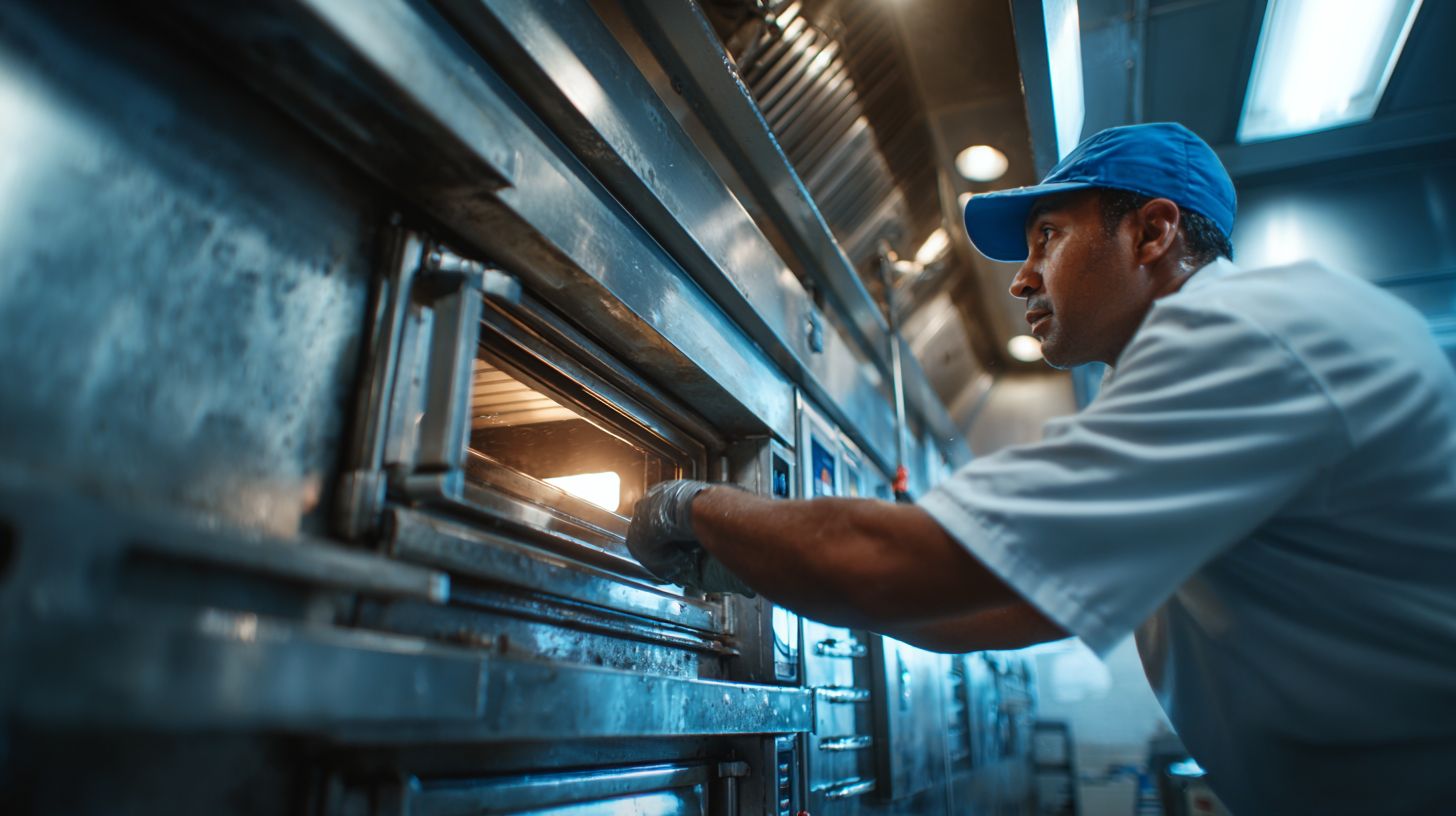


There’s a point in most kitchens where something starts to feel slightly different, but no one can quite explain why.
It doesn’t happen all at once. It’s not tied to a specific event. There’s no obvious moment where something breaks or stops working. Instead, it’s more of a gradual shift. The space feels warmer earlier in the day. The air doesn’t move the same way it used to. During busy hours, things feel just a little more difficult to manage.
At first, it’s easy to ignore.
People assume it’s just a long shift, or that the kitchen is busier than usual. Maybe the weather outside is hotter. Maybe it’s just one of those days. But as time goes on, that “one of those days” feeling starts happening more often.
This is usually where hood cleaning quietly enters the conversation, even if no one says it out loud.
In a working kitchen, most problems are obvious. Equipment stops working. Something breaks. A process slows down. But airflow and environmental changes don’t behave like that.
They don’t announce themselves.
Instead, they show up in small ways:
None of these are immediate red flags. They’re easy to work around. And because kitchens are fast-paced environments, people adapt quickly without questioning why something feels different.
That’s what makes this kind of change easy to miss.
Before anything becomes visible, it’s almost always something you feel first.
It’s subtle.
You might notice that standing near the line feels more tiring than usual. Or that moving between stations feels more demanding. Even simple tasks feel like they require a bit more effort.
No one stops to analyze it in the moment. There’s too much going on.
But these are often the earliest indicators that something in the environment has shifted.
And more often than not, that shift is connected to what’s happening above the cookline.

Most kitchen cleaning routines focus on what’s in front of you.
But the system above everything else doesn’t always get the same level of attention.
Not because it’s unimportant, but because it’s out of sight.
And when something is out of sight, it’s easy to assume it’s not changing.
Every time cooking starts, the same process repeats.
Heat rises. Air moves upward. Tiny particles follow that movement. Some of those particles get pulled away, but not all of them leave the system.
A small portion stays behind.
At first, it’s nothing.
Then it happens again.
And again.
Day after day, those small amounts begin to layer.
No single day creates a problem. It’s the accumulation over time that changes things.
If you’ve worked in different kitchens, you’ve probably noticed something that’s hard to explain.
Some kitchens just feel easier to work in.
Not because they’re less busy. Not because the staff is different. But because the environment itself feels more manageable.
Air moves naturally. Heat doesn’t overwhelm the space. Even during peak hours, things feel controlled.
Then there are kitchens where everything feels just a bit harder.
It’s not always obvious why.
But over time, you start to realize that the difference often comes down to how the environment is being maintained.
A single moment doesn’t tell you much.
But a full shift does.
During long hours, small differences become more noticeable:
Individually, these don’t seem significant.
But combined, they affect how the entire shift feels.
By the end of the day, those small differences can make the work feel more demanding than it should.

One of the most interesting things about kitchen environments is how quickly people adapt.
If something changes, even slightly, staff adjust:
The kitchen continues to function.
But underneath that, conditions have changed.
And those adjustments become the new normal.
Condition Type | What It Feels Like | How Work Flows |
Balanced environment | Air moves easily, heat stays manageable | Tasks feel smooth and predictable |
Slightly affected environment | Air feels heavier, heat builds faster | Work requires more effort over time |
Heavily affected environment | Heat lingers, airflow feels restricted | Tasks become physically demanding |
These differences are not always dramatic. But they are noticeable over time.
A common approach is to wait until something looks wrong.
But with hood systems, visible signs usually appear later.
By the time you see:
The internal changes have already been developing for a while.
This is why relying only on what you can see often leads to delayed action.
The kitchens that feel the most manageable are not the ones that never deal with buildup.
They’re the ones that stay consistent.
Consistency doesn’t mean doing more. It means not letting small changes accumulate unchecked.
It’s about maintaining a steady baseline.
When that baseline is maintained:
When routines become irregular, changes begin to stack up.
Not dramatically. Just gradually.
At first, it’s manageable.
Then it becomes noticeable.
And eventually, it becomes something that affects daily work.

Not all kitchens experience the same rate of change.
Kitchen Type | Daily Activity | Rate of Environmental Change |
High-volume kitchens | Continuous operation | Changes happen quickly |
Peak-hour kitchens | Intense bursts of activity | Changes happen unevenly |
Moderate kitchens | Balanced workflow | Changes develop gradually |
Low-use kitchens | Occasional activity | Changes develop slowly |
The more consistent the activity, the more consistent the buildup.
During slower periods, small inefficiencies are easy to ignore.
But during peak hours, everything is amplified.
This is when the environment shows its true condition.
Instead of seeing hood cleaning as a task, it helps to see it as part of how the kitchen maintains balance.
It’s not separate from daily operations.
It supports them.
It influences:
The biggest impact of hood cleaning isn’t immediate.
It’s long-term.
Over weeks and months, consistency creates:
These changes don’t stand out day by day.
But over time, they make a difference.

Most kitchens don’t notice the moment things start to change.
They notice how things feel after those changes have already taken place.
That’s what makes hood cleaning different from most tasks.
It’s not about reacting to something obvious.
It’s about maintaining something that’s constantly shifting, even when you don’t see it happening.
And in a working kitchen, that quiet consistency is what keeps everything running the way it should.
If your kitchen begins to feel warmer, heavier, or harder to manage, it’s a good idea to look at patterns rather than wait for something obvious. Small changes in airflow or temperature often build gradually. Staying consistent with hood cleaning routines and paying attention to areas that are not part of daily cleaning can help bring the environment back to a more balanced state.
There isn’t a one-size-fits-all schedule. The frequency depends on how your kitchen operates. High-volume kitchens usually need more frequent attention, while moderate-use kitchens can follow a more spaced-out routine. What matters most is consistency. Kitchens that maintain regular hood cleaning tend to stay more stable over time.
The risks are usually gradual rather than immediate. You may notice the kitchen becoming more physically demanding to work in, with heat building faster and airflow feeling less consistent. Over time, these changes can affect how smoothly daily operations run, even if everything still appears functional.
When hood cleaning is delayed repeatedly, small changes begin to build up. The kitchen may start to feel harder to manage, especially during busy periods. Staff may adjust to the conditions without realizing it, but the environment becomes less predictable and requires more effort to work in.
The cost is not always immediate or obvious. It often shows up in day-to-day operations. Tasks may take more effort, staff may feel more fatigue, and the kitchen may feel less efficient overall. Over time, these small impacts add up and affect how the entire space functions.