


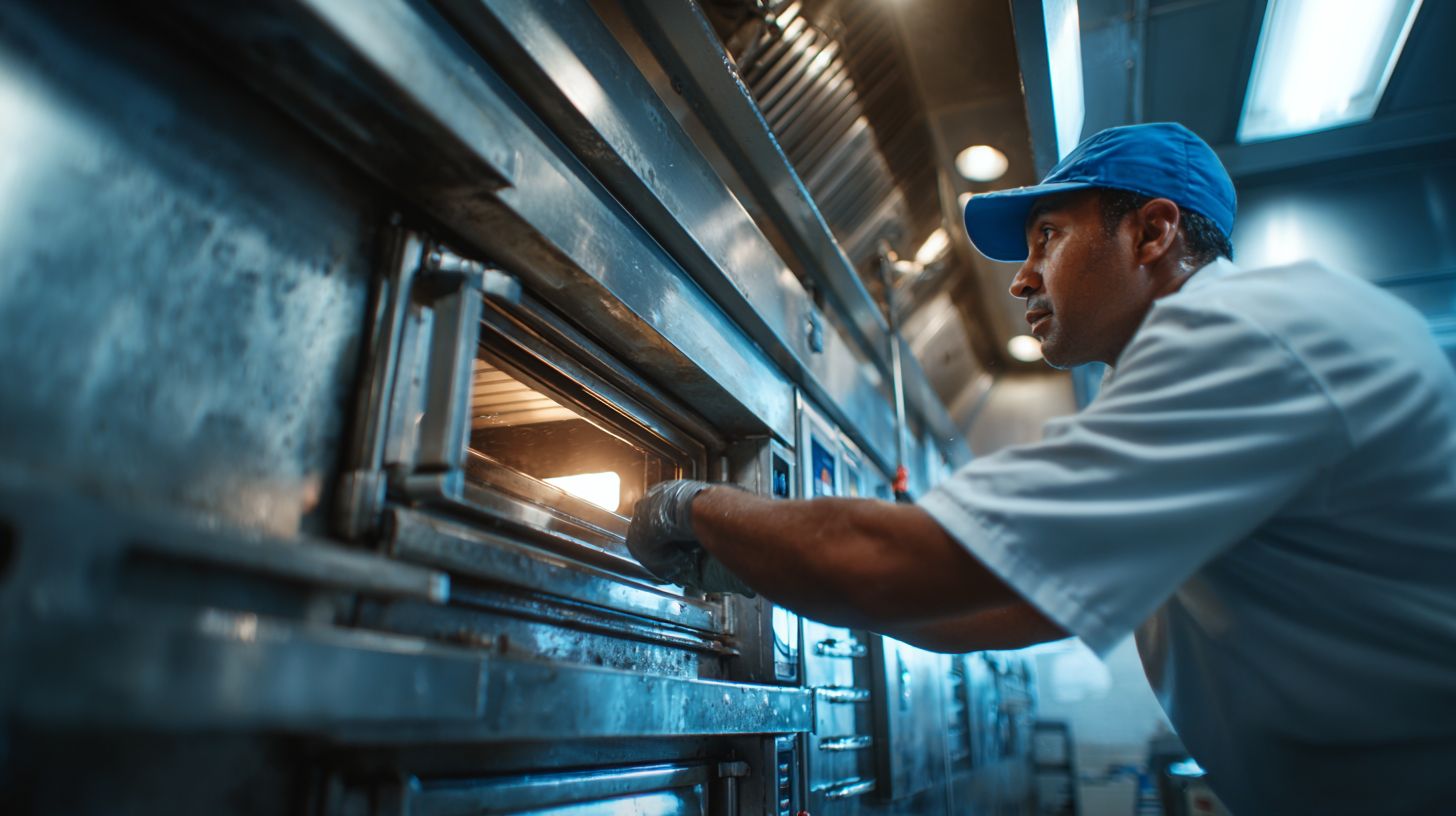


There is a point in every kitchen where the environment starts to feel different, even if nothing obvious has changed. It does not come from a single moment or a specific event. Instead, it develops slowly, almost unnoticeably, until it becomes part of the daily experience.
This is where hood cleaning begins to play a more important role than most kitchens initially realize.
At first, everything feels manageable. Air moves the way it should, heat rises and clears, and the space remains comfortable enough to keep things running smoothly. But as time goes on, small changes begin to build. They do not interrupt operations, which is why they are often ignored.
Understanding these gradual shifts is closely connected to ideas explored in How Hood Cleaning Shapes the Day-to-Day Feel of a Working Kitchen, where the focus is not just on cleaning, but on how the environment evolves over time.
In a working kitchen, most problems are visible. Equipment stops working, surfaces get dirty, or something clearly needs attention. But airflow and environmental balance do not behave the same way.
They change quietly.
These are not dramatic changes. They are easy to overlook. But they are often the first indicators that something inside the system is shifting.
This is why discussions around Understanding Hood Cleaning in Houston and How It Supports Daily Kitchen Operations often focus on what is felt rather than what is seen.
Houston kitchens operate under conditions that naturally amplify small differences.
Because of this, even minor changes in airflow or buildup can become noticeable faster than in other environments.
This is not just about workload. It is about how the environment interacts with daily operations.

Every time cooking begins, the same process repeats.
At first, what remains is minimal. It does not affect anything.
But over time, those small amounts begin to layer.
The process is gradual, which is why it rarely triggers immediate action. Kitchens continue operating, adjusting without realizing that conditions are slowly changing.
Immediate problems are easy to address.
Gradual changes are not.
Type of Change | How It Appears | How It Is Handled |
Immediate issue | Sudden and visible | Fixed quickly |
Gradual buildup | Slow and subtle | Often ignored |
Environmental shift | Felt over time | Misinterpreted as normal |
This difference explains why hood cleaning is often overlooked until conditions become more noticeable.
One of the most consistent patterns in kitchen environments is adaptation.
When something feels different:
But because the kitchen continues to function, these adjustments become the new normal.
This is one of the reasons why resources like Why Local Kitchens Rely on Structure Instead of Guesswork emphasize consistency rather than reaction.
Structure is not about doing more work. It is about maintaining consistency.
When routines are consistent:
When routines are inconsistent:
This is where Kitchen Hood Cleaning Services become part of maintaining that structure, rather than reacting to visible issues.

During slower periods, minor inefficiencies are easy to ignore.
But during peak hours:
This is when the kitchen environment reflects its true condition.
Even small changes can affect how the entire space feels.
Most of the important changes do not happen in visible areas.
They occur in:
This is why understanding the full process, as outlined in How to Clean a Restaurant Hood, provides better insight into where buildup actually develops.
Hood systems do not exist in isolation. They are part of a larger environment that includes multiple systems working together.
When one part changes, it can influence others.
This is similar to how Faciliy repair services address broader system performance, not just individual components.
Across Houston and surrounding areas, environmental conditions play a major role.
These factors make consistency more important than in many other locations.
Condition Level | What It Feels Like | Impact on Work |
Balanced | Air moves freely | Tasks feel manageable |
Slightly affected | Air feels heavier | Work requires more effort |
Noticeably affected | Heat lingers | Workflow becomes more demanding |
These changes do not happen suddenly. They develop gradually.

Because changes are gradual:
By the time something becomes obvious, it has already been developing for a while.
Over time, small differences begin to add up.
These are not immediate problems, but they affect how the kitchen functions day after day.
Different areas around Houston experience similar patterns, even if the pace of work varies.
In places supported by Commercial Facility Maintenance Services in Houston, TX, these environmental factors are constant.
The same applies to surrounding areas like Commercial Facility Maintenance Services in Katy, TX, where humidity and heat create similar conditions.
Instead of seeing hood cleaning as a task that happens occasionally, it helps to see it as part of maintaining balance.
It supports:
This perspective makes it easier to understand why it matters.

Consistency does not produce immediate results.
It creates stability over time.
These differences are not dramatic, but they are noticeable over long shifts.
Without consistency:
These changes develop slowly, but they continue to grow.
Hood cleaning is not always something kitchens think about right away.
It does not demand attention the way other tasks do.
But over time, it becomes one of the defining factors in how the kitchen feels and functions.
The kitchens that operate most smoothly are not the ones that avoid change completely.
They are the ones that maintain consistency, even when those changes are not immediately visible.
Because in a working kitchen, it is not the obvious problems that have the biggest impact.
It is the gradual ones that build quietly in the background.
Q: How often should commercial hood cleaning be done in Houston?
A: High-volume kitchens often require monthly or quarterly cleaning due to heavy grease production and humid conditions.
Q: Do Katy and The Woodlands kitchens need the same cleaning frequency?
A: Not always. Cleaning frequency depends on cooking volume, but regular maintenance is still essential for consistency.
Q: What happens if a hood system is not cleaned regularly?
A: Grease buildup can reduce airflow, increase fire risk, and create an uncomfortable kitchen environment.
Q: Does weather affect hood performance?
A: Yes. Heat and humidity can accelerate grease buildup and impact ventilation efficiency.